Family story
A grave in Menton
A walk through the old town on the French Riviera ended at a cemetery with an Orthodox chapel. The first headstone carried the surname whose letters the family had been working on for three years.
On 1 November 2014 Mikhail Bakunin and Elizaveta Wiesel, the painter’s great-great-granddaughter, drove from Nice to Monaco and on to Menton. The walk through the old town was unplanned: they climbed the lanes until they came up against a cemetery with a gold-domed Orthodox chapel, near the highest point of the town.
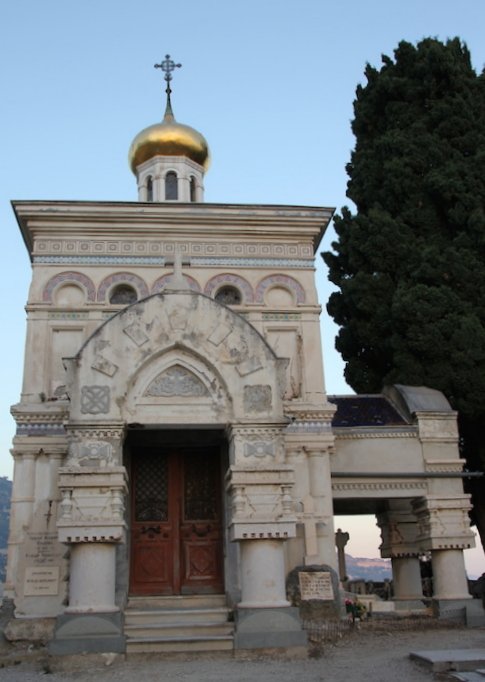
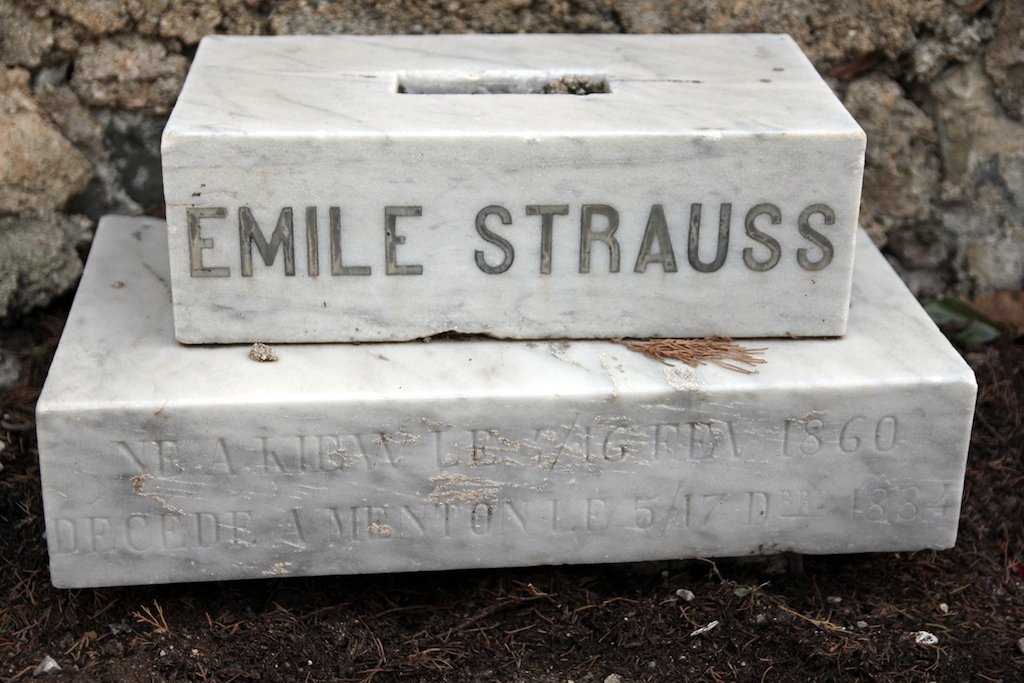
Subjects of the Russian Empire lay all around. One of the first headstones read:
EMILE STRAUSS
Inscription on the headstone
NE A KIEW LE 4/16 FEV 1860
DECIDE A MENTON LE 5/17 D BRE 1884
By then they had spent three years on the diary of Emil Strauss, the father of Alexandra Wiesel. In the family pedigree his children had question marks instead of dates. One of the sons, also Emil, was born in Kyiv and died young of consumption. Nothing more was known about him.
Why Menton
The coincidence explained itself quickly. A Russian colony formed in Menton in the second half of the nineteenth century, when the Russian nobility discovered the Riviera and the Russian navy set up a base at Villefranche. In 1880 a tuberculosis sanatorium called the Russian House opened here. The cemetery was founded the same year, four years before this burial.
Pine woods, sea air and mountains: the place looks like a sanatorium in itself. Emil Strauss the younger evidently came here to be treated and lost to a disease that is hard even by modern standards.
So one question mark in the pedigree closed on a walk. The other children of Emil Strauss, prosperous and visible people, disappear from view after 1917, and what became of them is still to be found out.
Sources
- Russian cemetery in Menton, headstone inscription
- Diary of Emil Strauss. Wiesel family archive, Kazan
- First published on the family blog: 189295