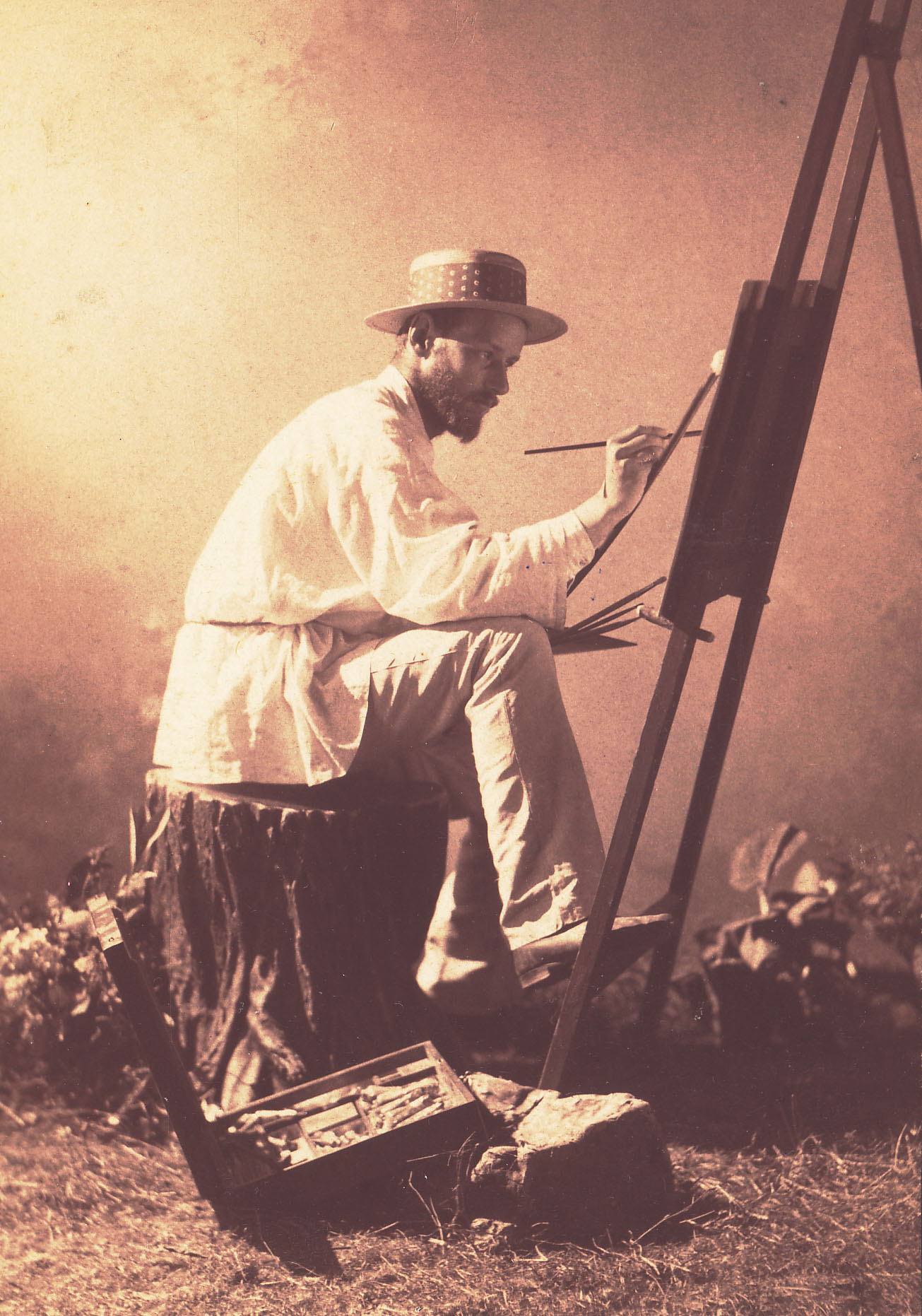
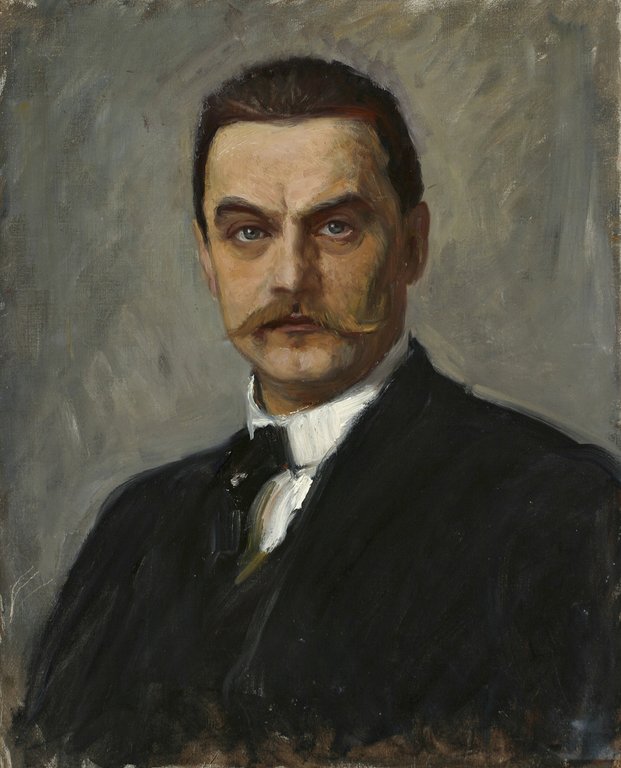
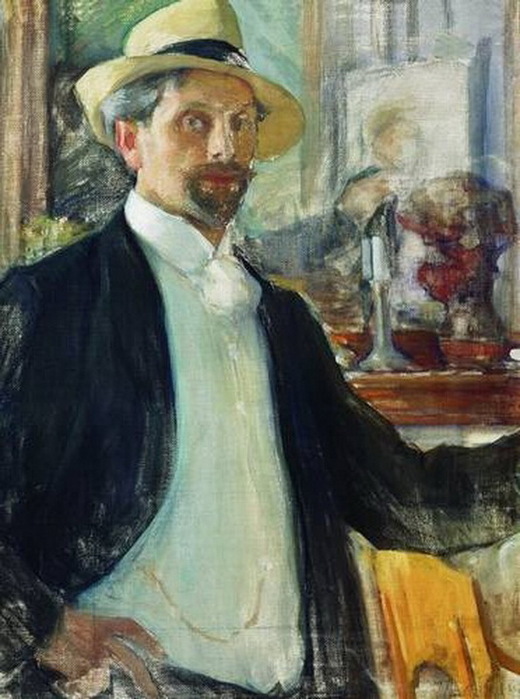
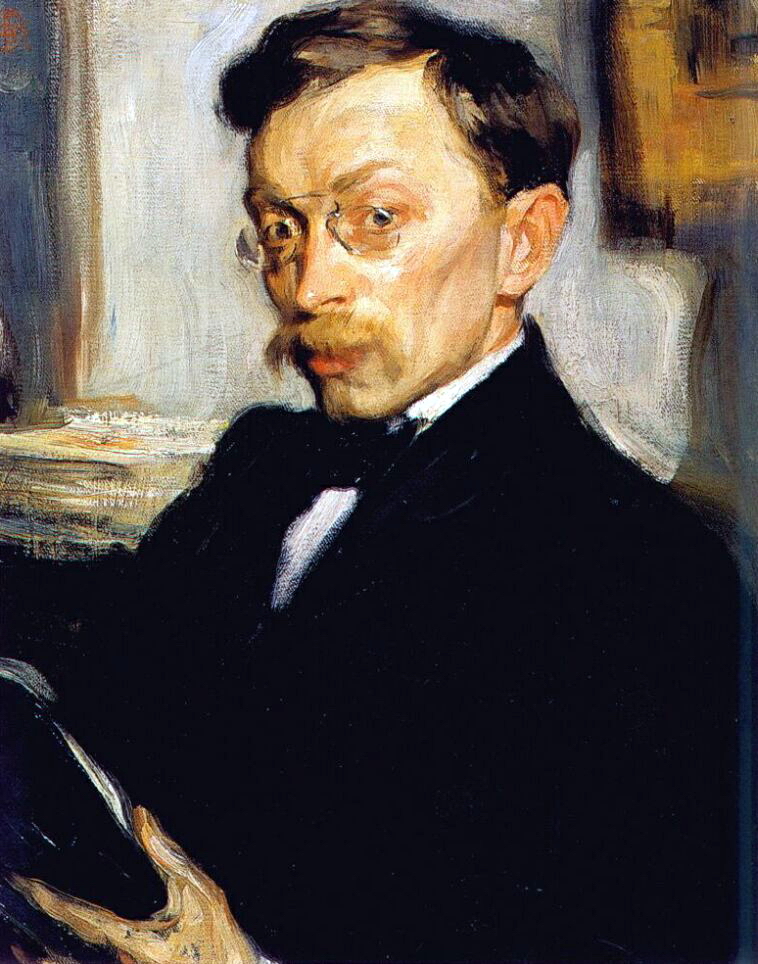
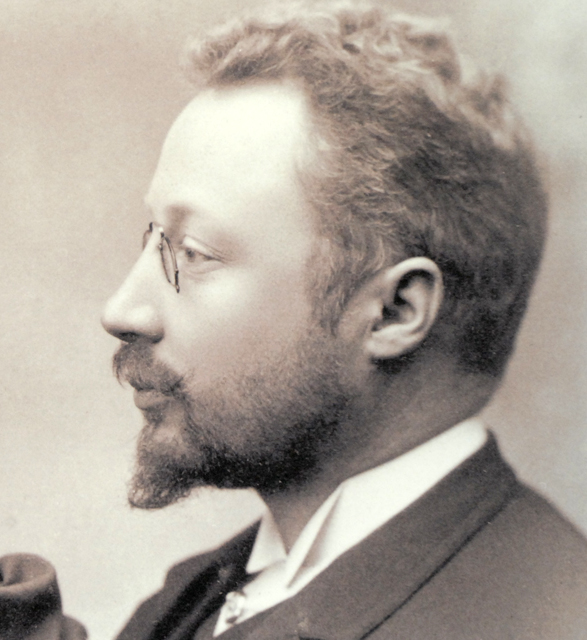
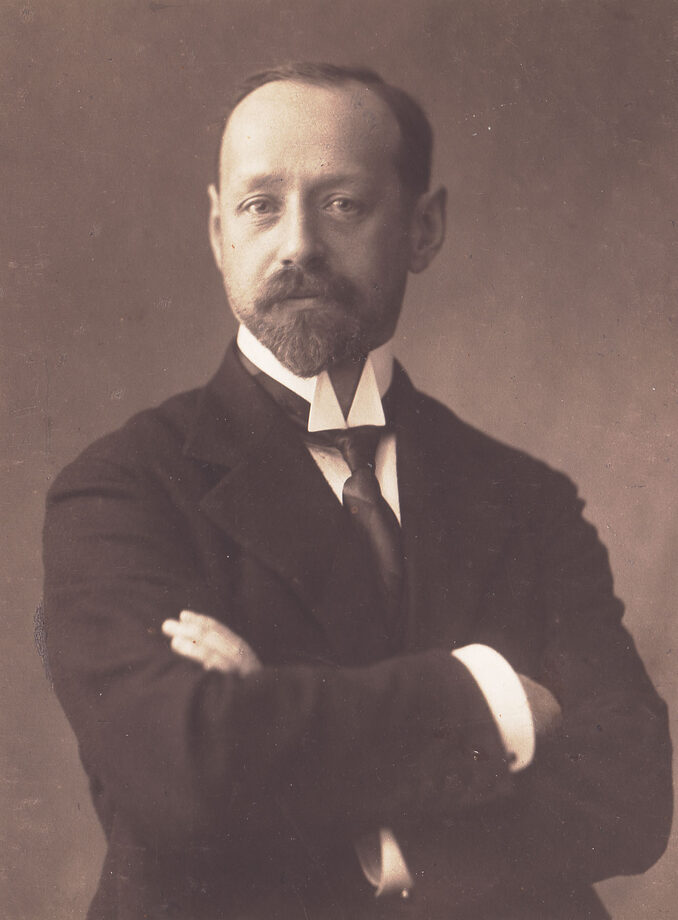
Baptized Emil Anton Joseph von Wiesel. Descended from German-Austrian nobility, he wrote his name “von Wiesel” in German documents and “de Wiesel” in French; he signed his work “E. Wiesel”.
Painter, museum curator and full member of the Imperial Academy of Arts, organizer of international art exhibitions, member of the councils of the Hermitage and the Russian Museum
Curator of the academy museum for some thirty years
The Hermitage
Curator of the department of drawings
Museums in Russia
Helped found museums in 23 cities
Legacy
About 1,500 paintings and works on paper
Chronology
Dates and events
Based on the family archive and the dissertation by I. F. Lobasheva
1866Born into the family of Oskar Bernhardovich Wiesel, an official of the Ministry of Finance.
1885–1889Studies at St Petersburg University, graduating from the mathematics division of the faculty of physics and mathematics. At the same time he studies at the Academy of Arts under P. P. Chistyakov.
Early 1890sMoves to Munich, where he works for about two years as an electrical engineer and studies at the Munich Academy of Fine Arts under A. Wagner.
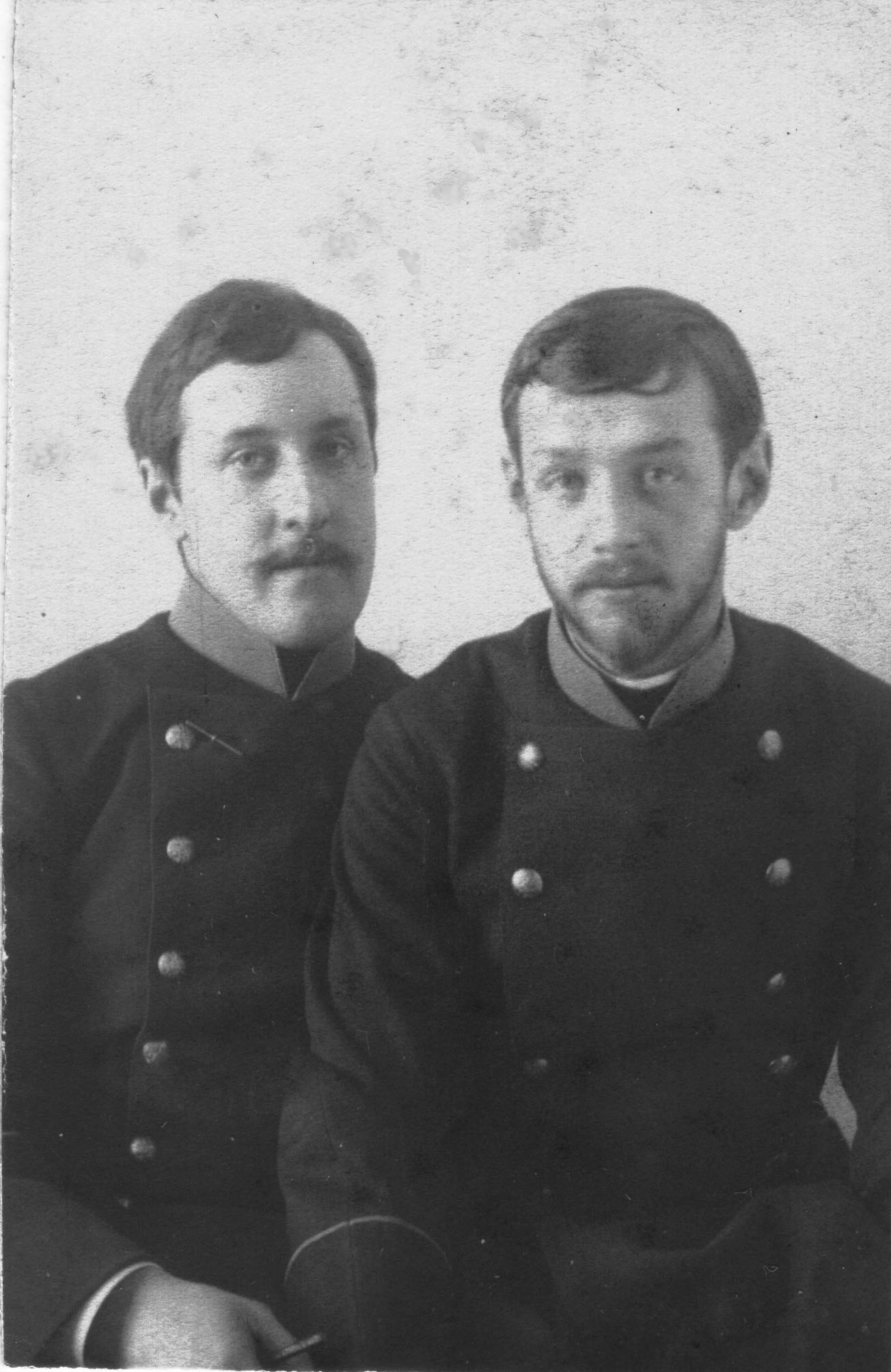
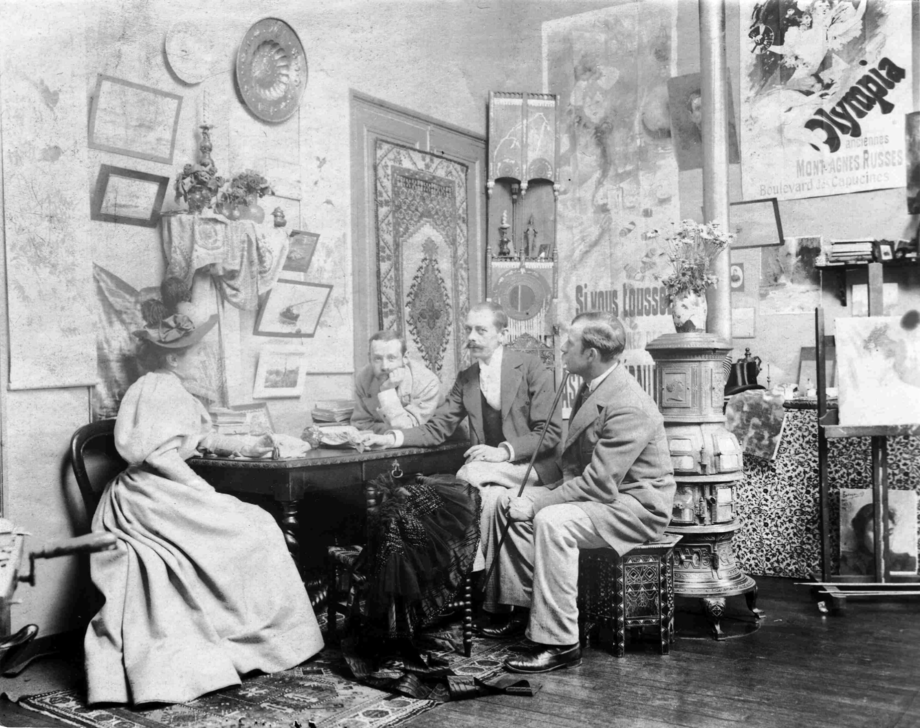
1893–1894Paris, the studio of Fernand Cormon. I. I. Endogurov studies alongside him.
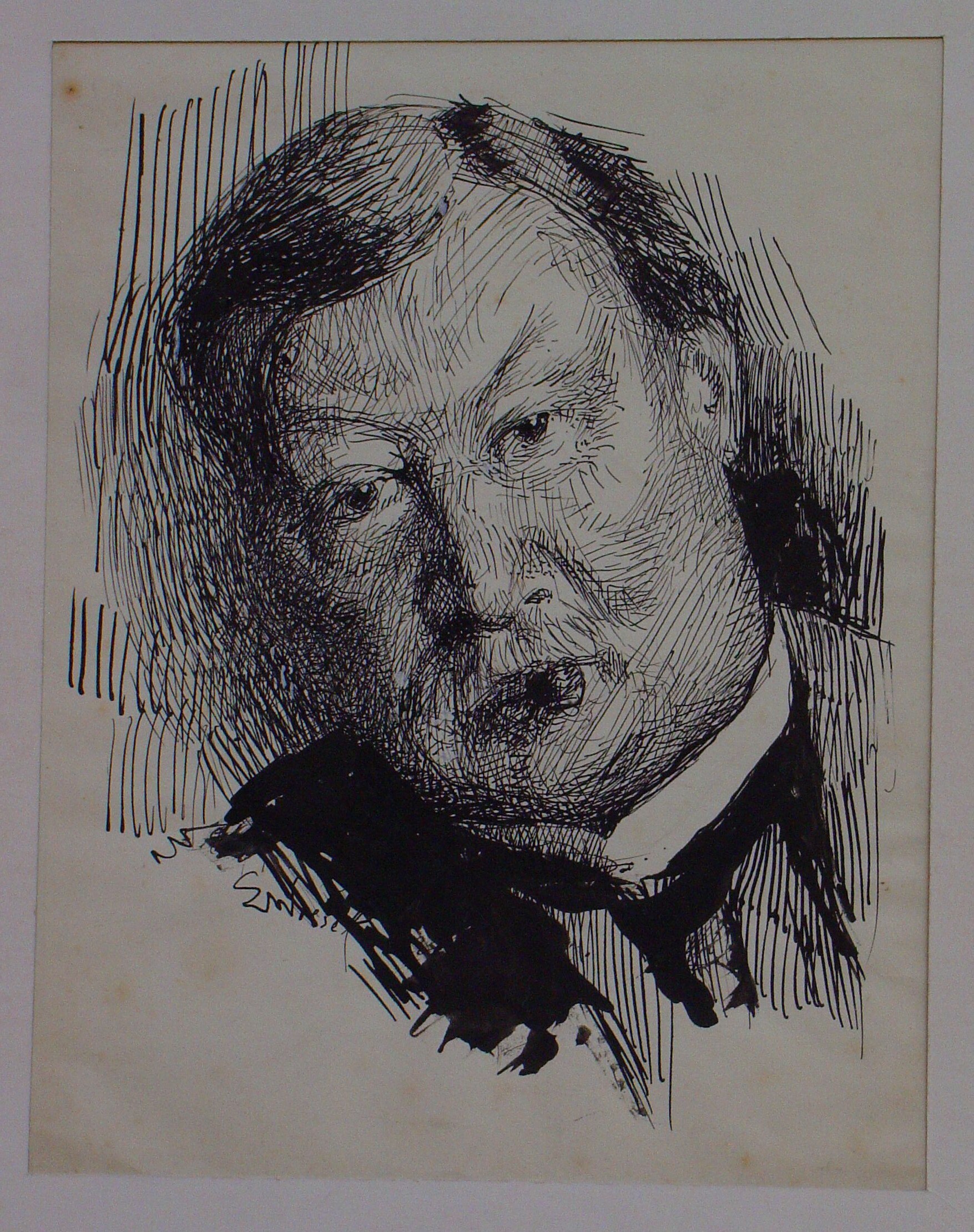
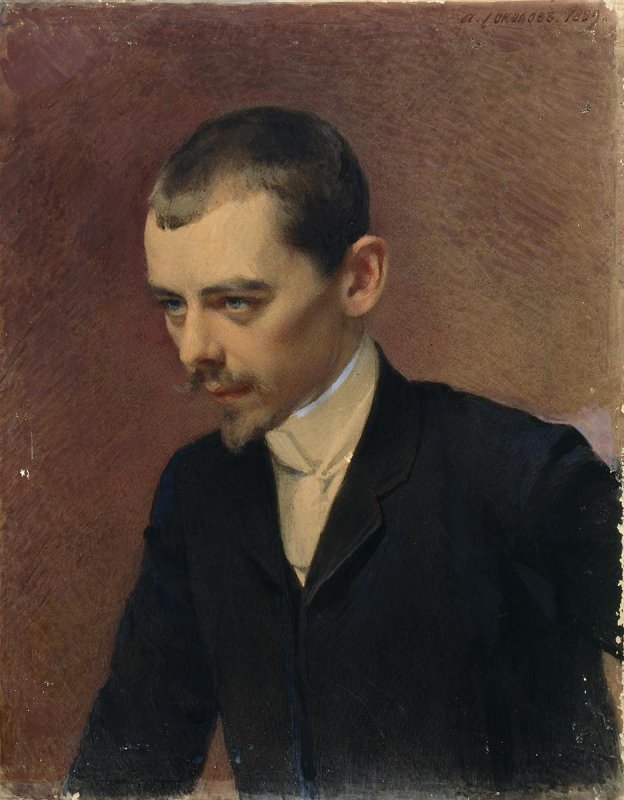
1894First recognition at the Paris Salon: his portrait of the painter I. I. Endogurov.
1894Appointed assistant curator of the museum of the Academy of Arts.
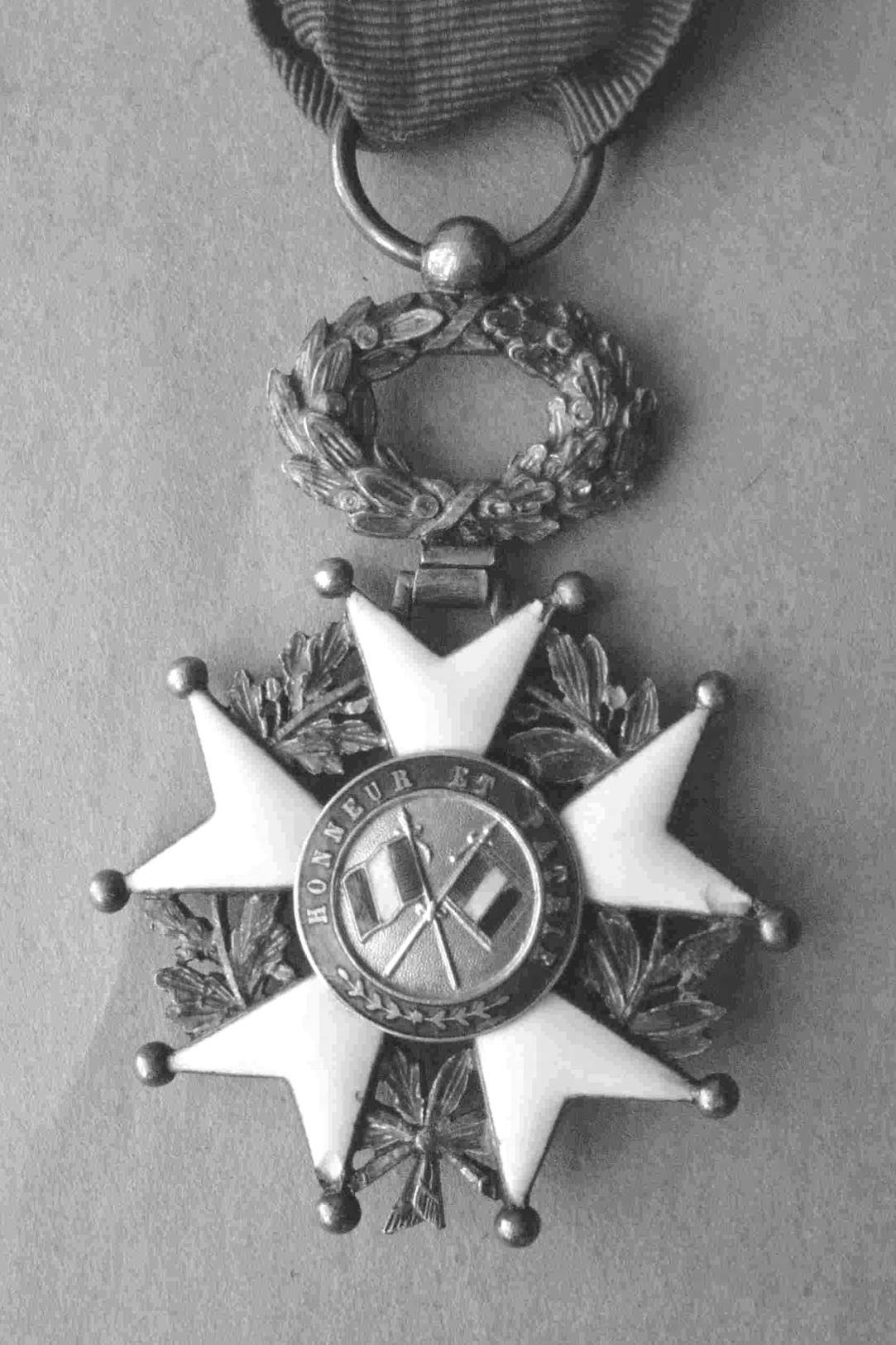
1900The Exposition Universelle in Paris. For organizing the Russian art section he is made a knight of the French Legion of Honor.
1907Becomes curator of the museum of the Academy of Arts. He reorganizes it: new departments, a department of casts of antique sculpture, and new museum statutes.
1909The Russian section of the 10th Munich International Art Exhibition.
1910The World Exhibition in Brussels.
1911The International Exhibition in Rome. The letters from V. A. Serov and D. I. Tolstoy are entirely concerned with it.
1911The International Exhibition in Turin.
1913The International Exhibition in Breslau, now Wrocław.
1914Elected a full member of the Imperial Academy of Arts.
1918The museum of the Academy of Arts is abolished; its finest works are transferred to the Russian Museum.
After 1917On the instruction of A. V. Lunacharsky he joins the expert commission of the museum department of Glavnauka. He was considered one of the finest experts on Russian and Western painting and sculpture.
1928Begins work in the department of drawings at the State Hermitage.
1930Delivers the paper “Visual Perception and Its Relation to Painting” at the fine arts department of the Institute of Art History.
1935Exiled with his family from Leningrad to the settlement of Chelkar in Kazakhstan. At the end of the year Wiesel and his wife are allowed to return.
1943Died in besieged Leningrad at the age of 77, unable to survive the hunger and cold of the blockaded city. He never stopped working until his final days.
Collection
Gallery
18 works
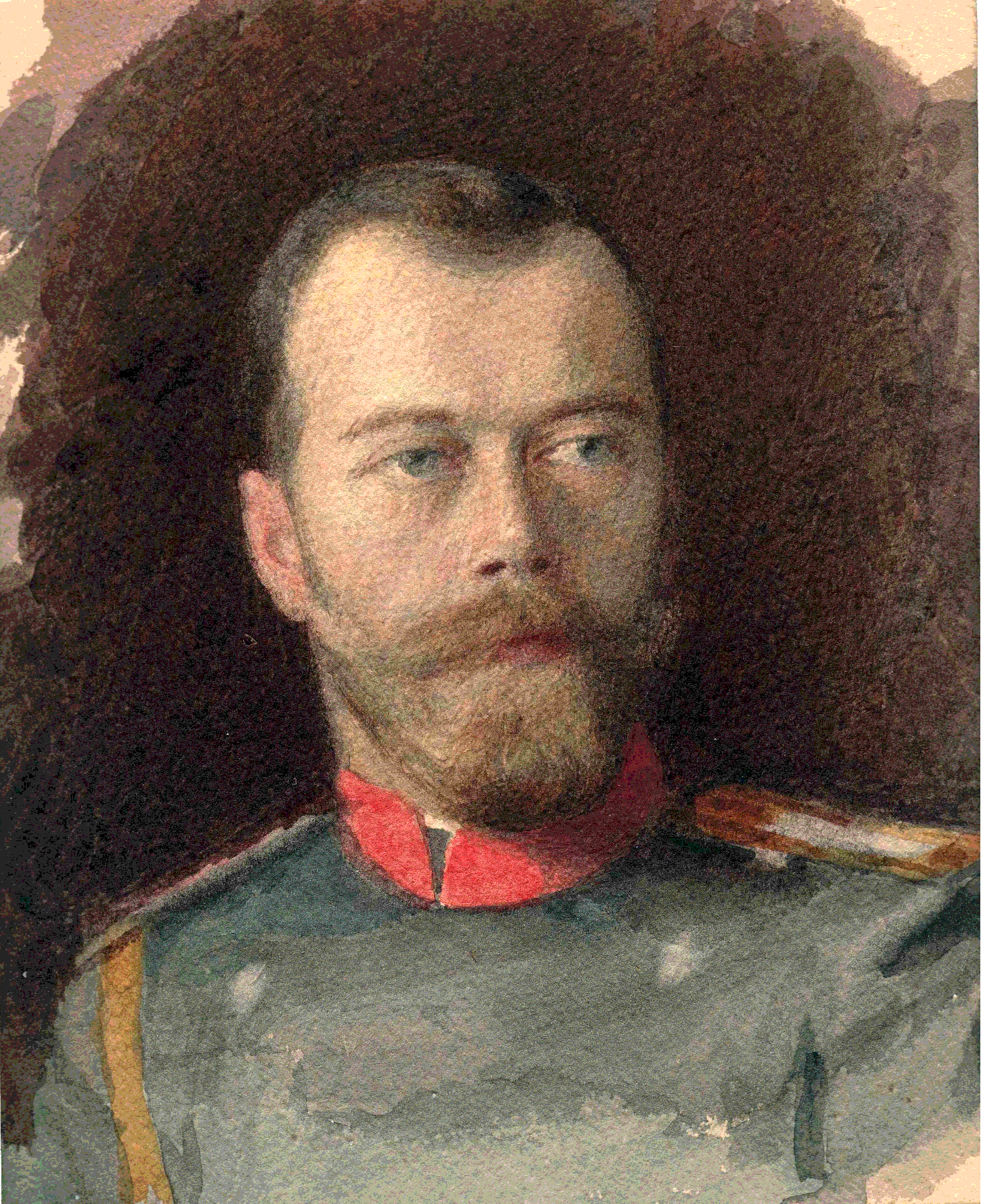
Nicholas II1910s
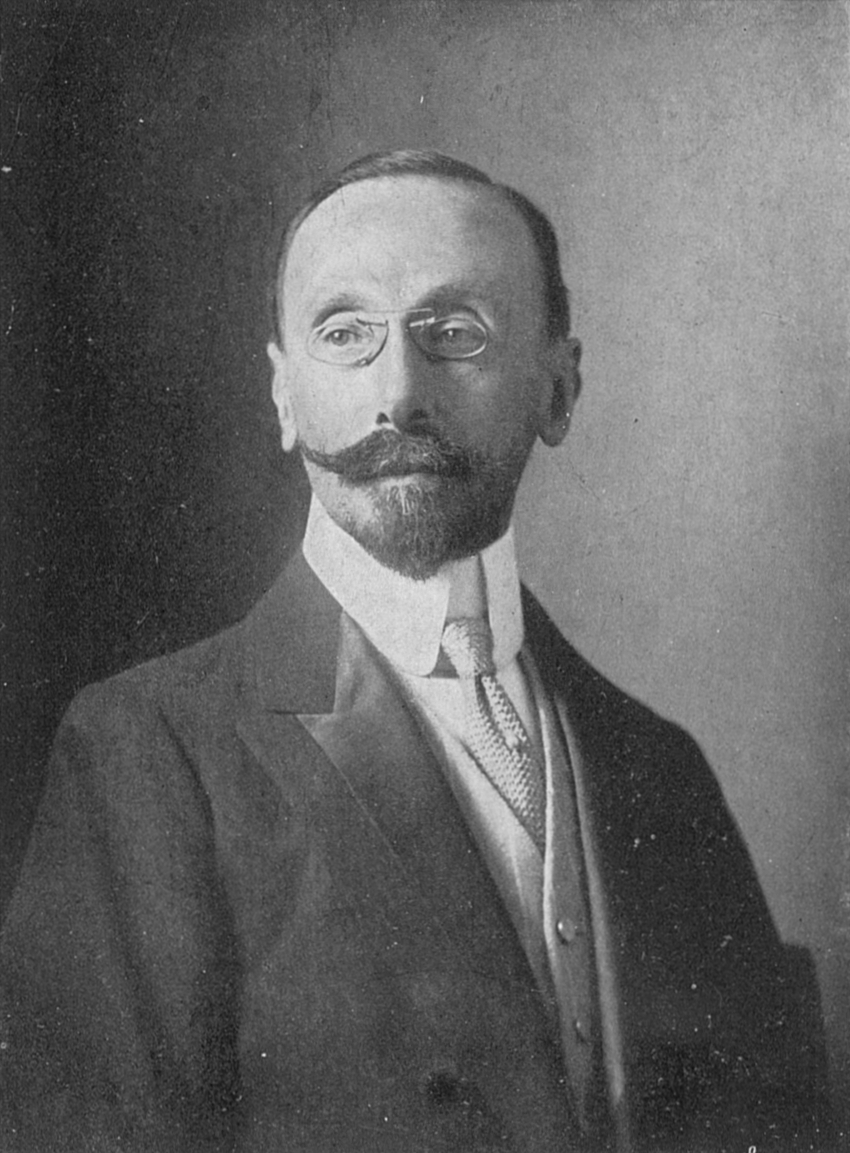
Count V. N. KokovtsovThe State Hermitage Museum
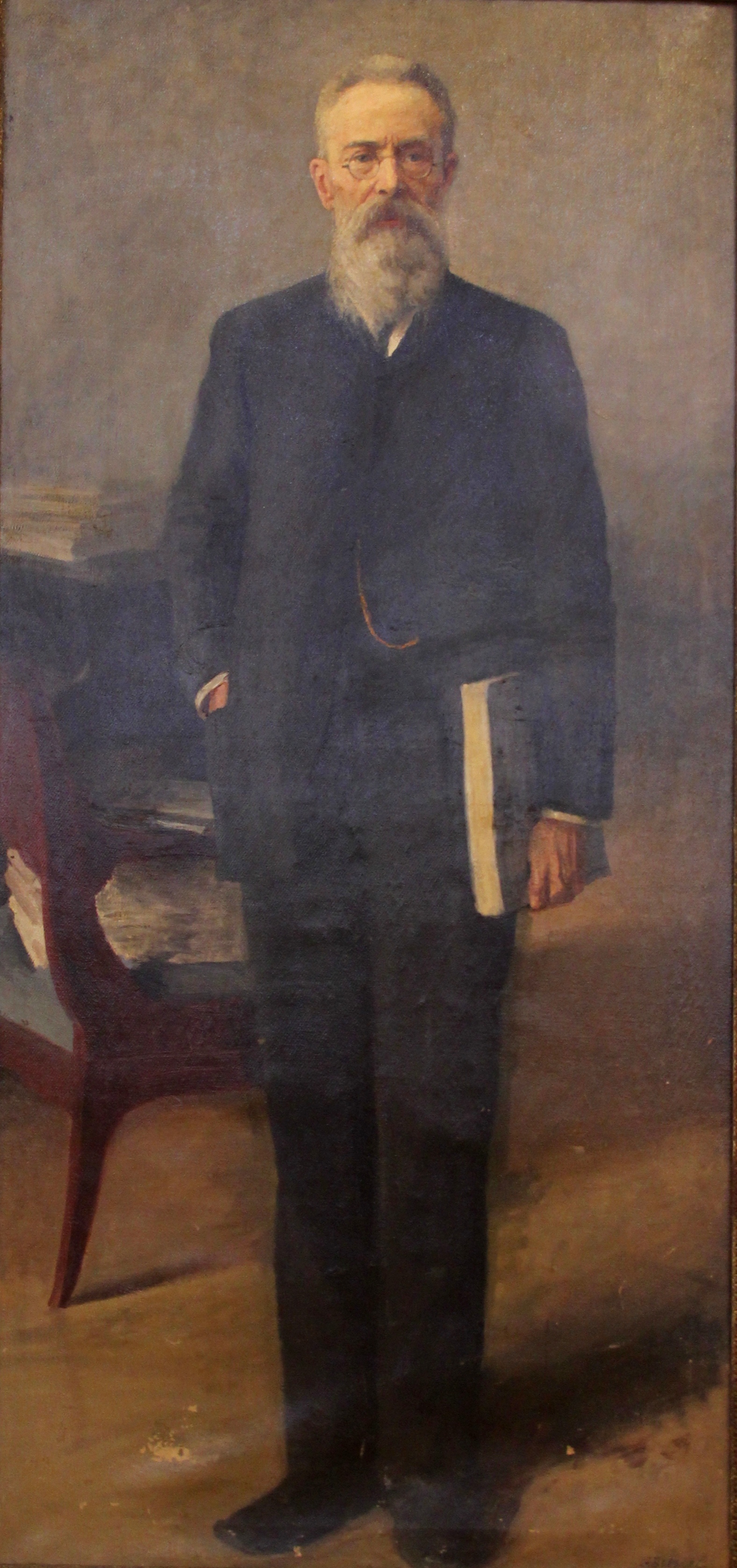
N. A. Rimsky-KorsakovRimsky-Korsakov St Petersburg State Conservatory
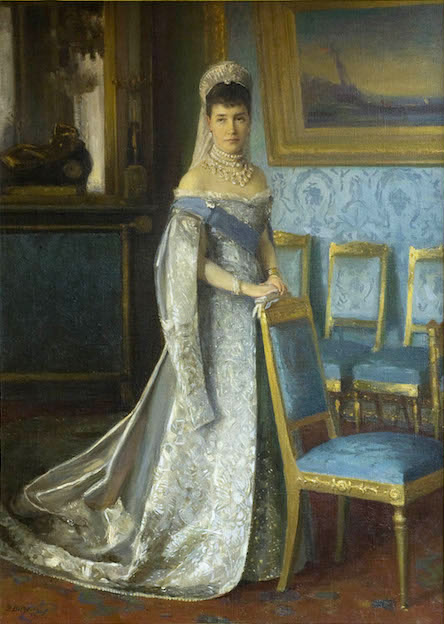
Empress Maria FeodorovnaPavlovsk Museum-Reserve
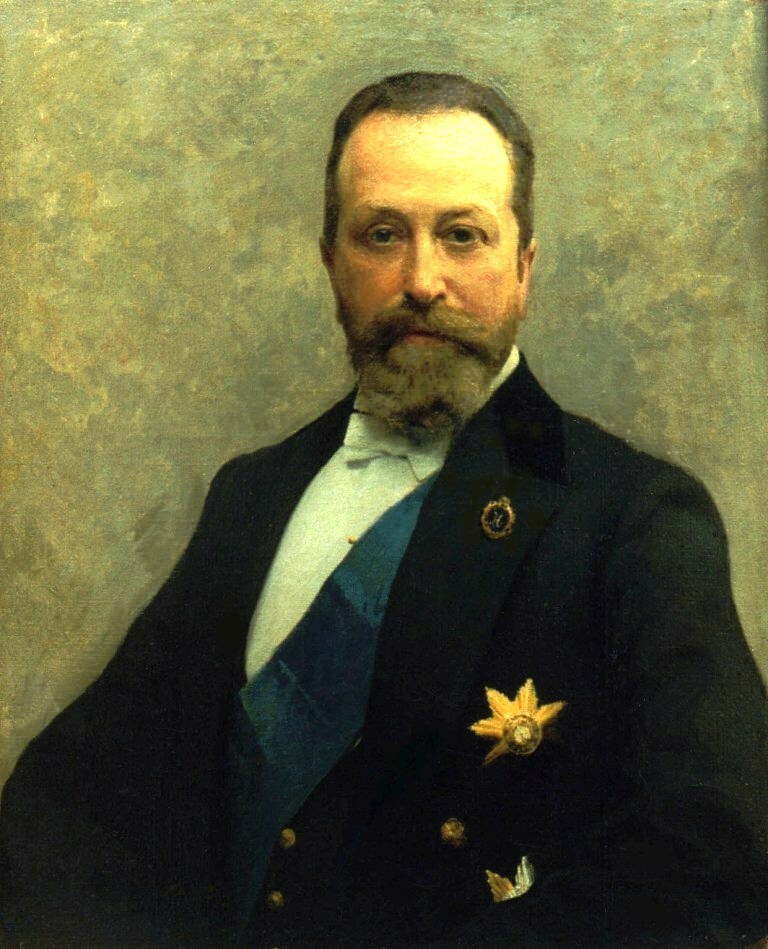
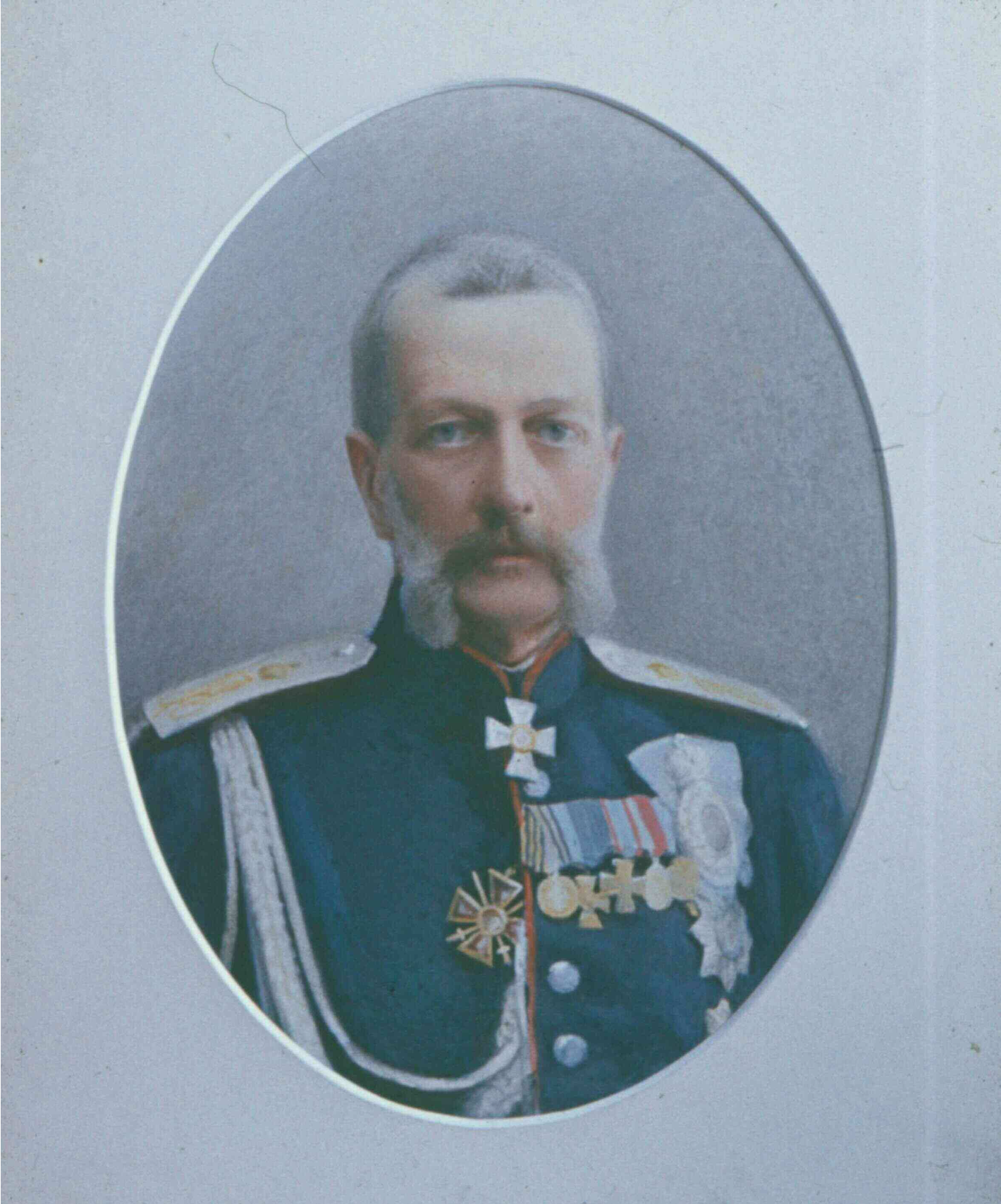
Grand Duke Vladimir AlexandrovichPresident of the Imperial Academy of Arts. 1910s
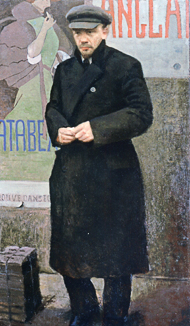
Lenin in exileState Historical Museum, Moscow
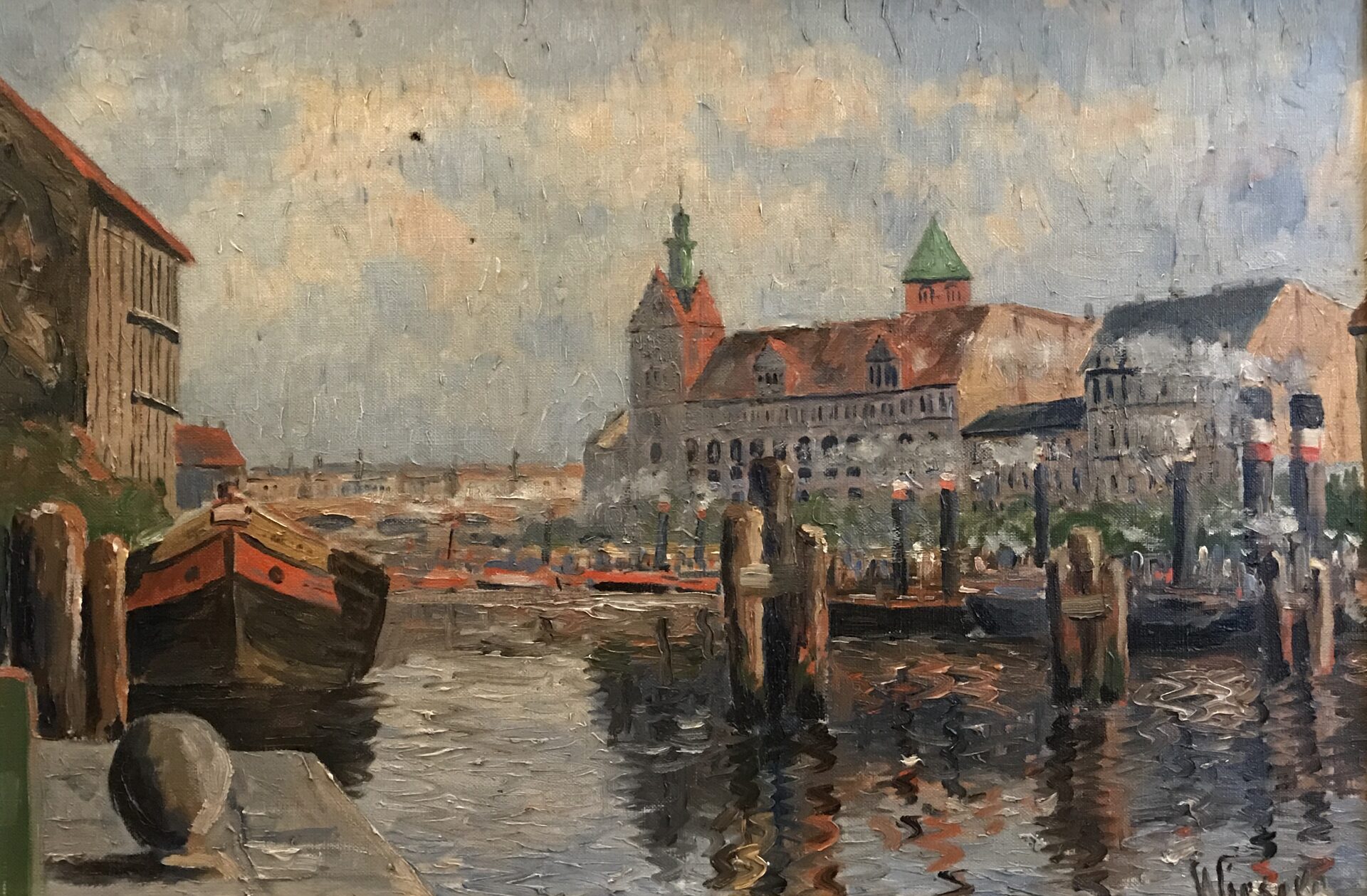
Venice
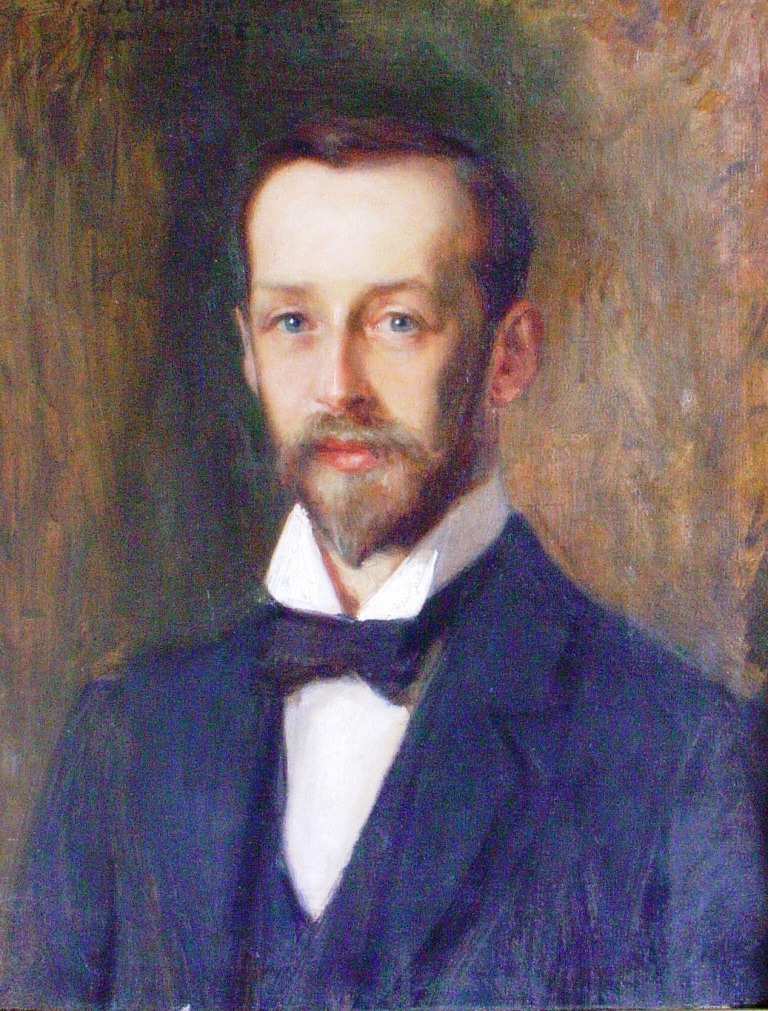
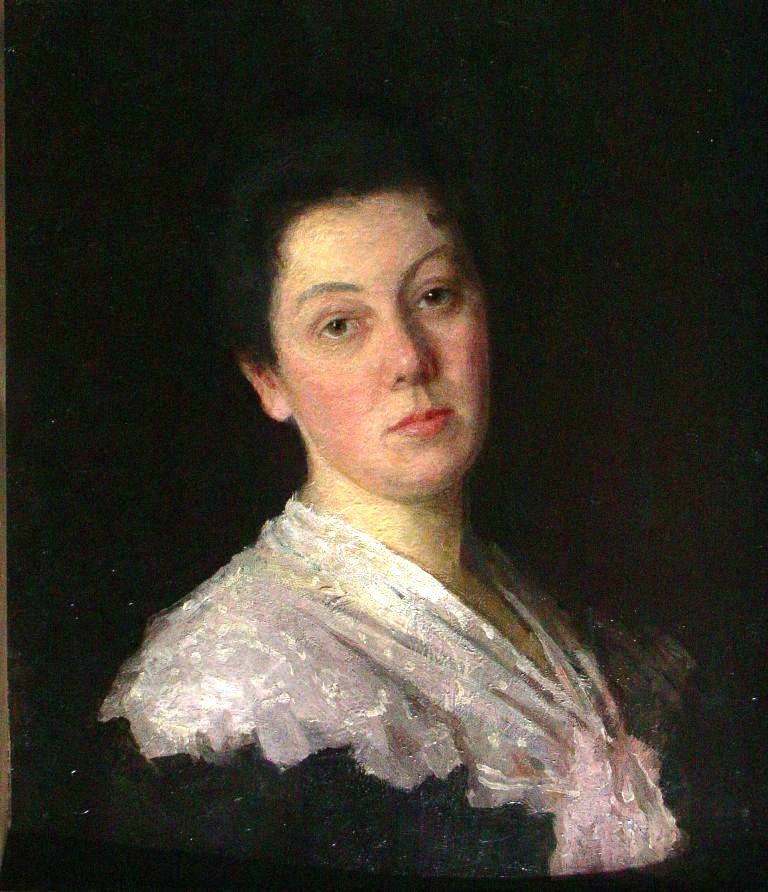
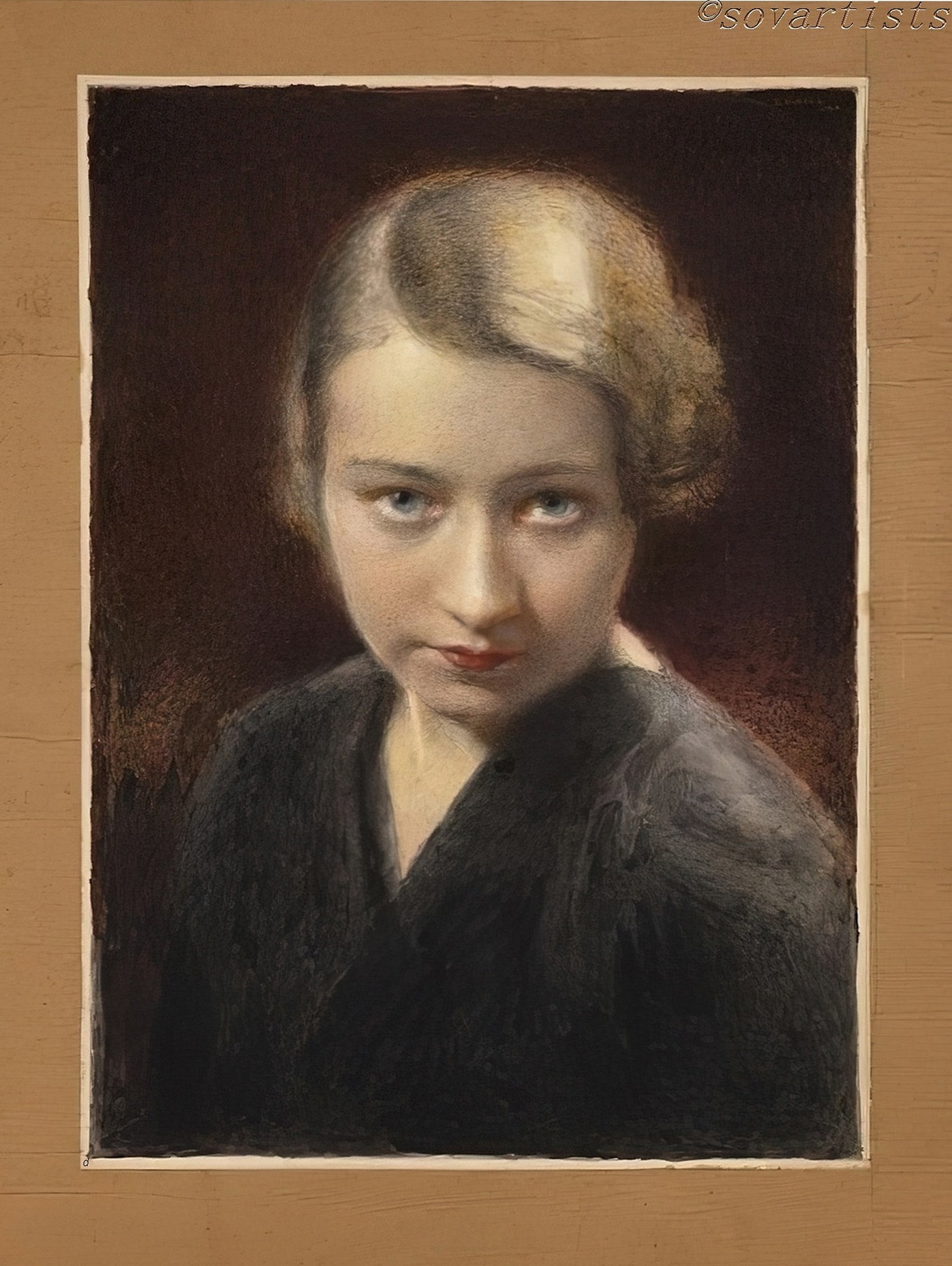
Alexandra Emilievna StraussThe artist’s wife. State Museum of Fine Arts of the Republic of Tatarstan
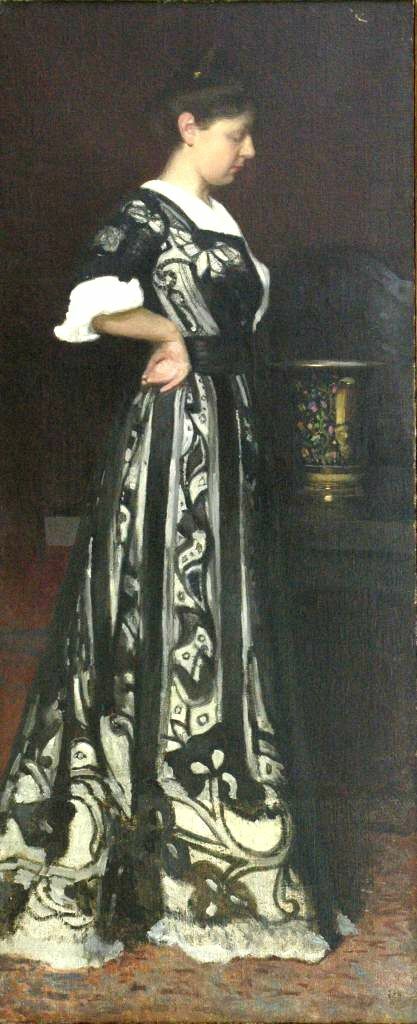
Alexandra Emilievna StraussThe artist’s wife. State Museum of Fine Arts of the Republic of Tatarstan
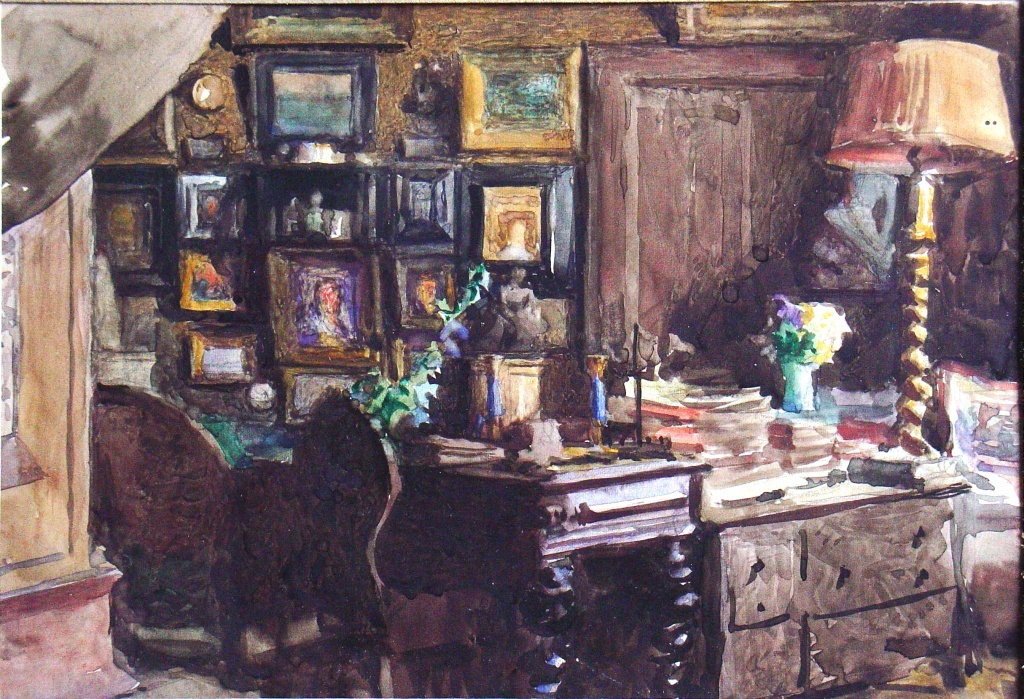
Interior of Wiesel’s apartment
Grand Duchess Maria Pavlovna the Elder1910s
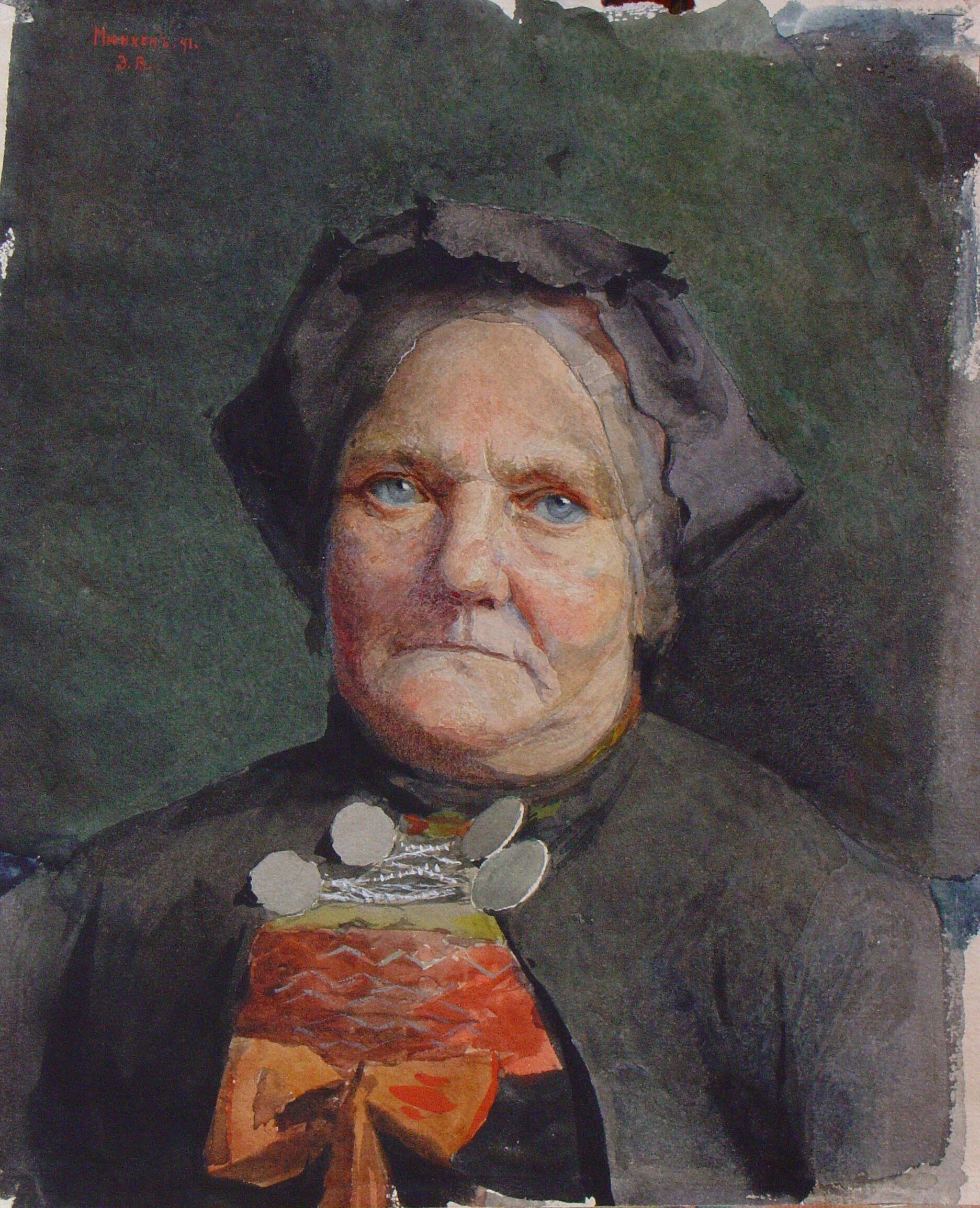
A burgher’s wife
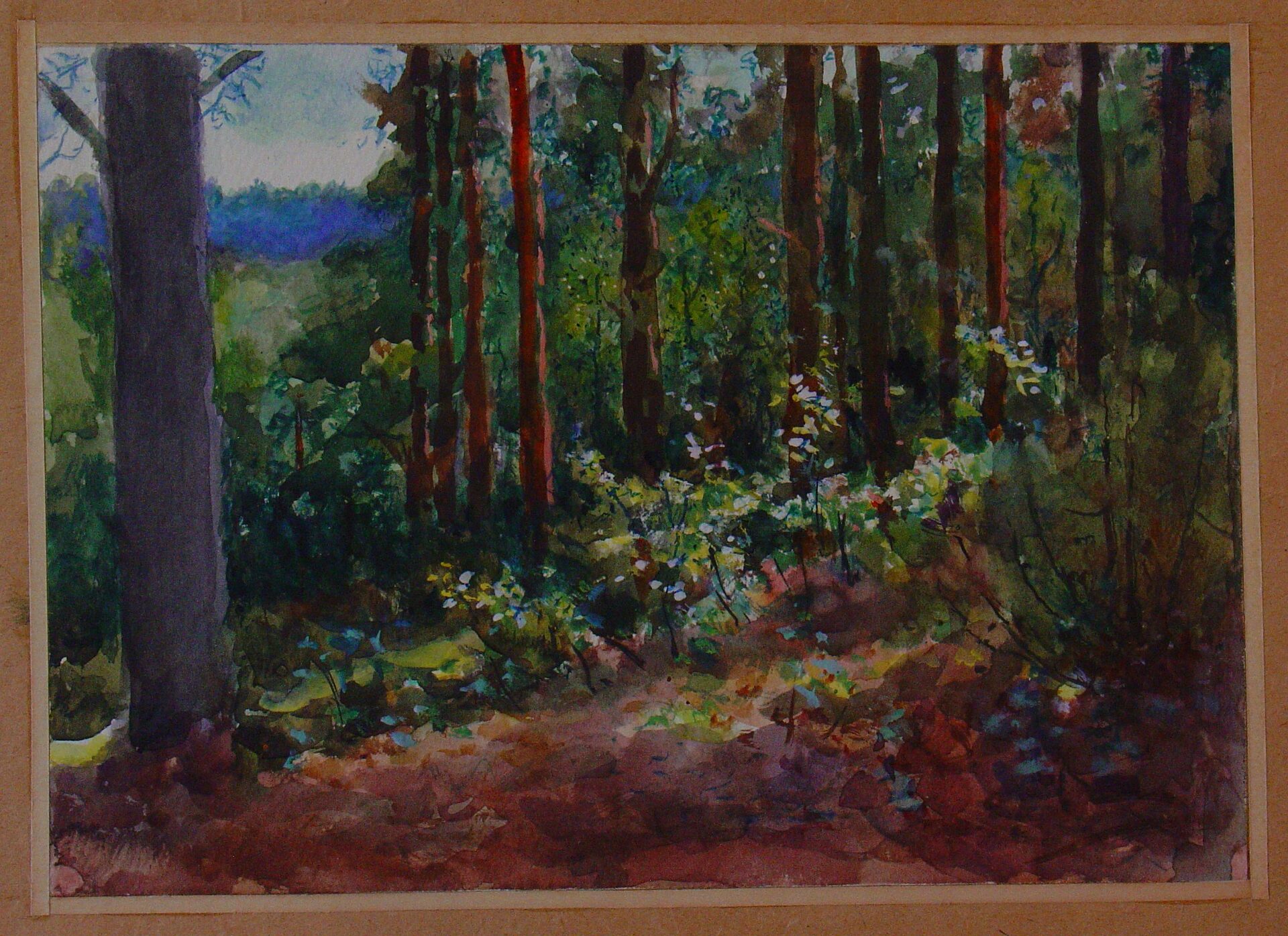
The forest at Rapti
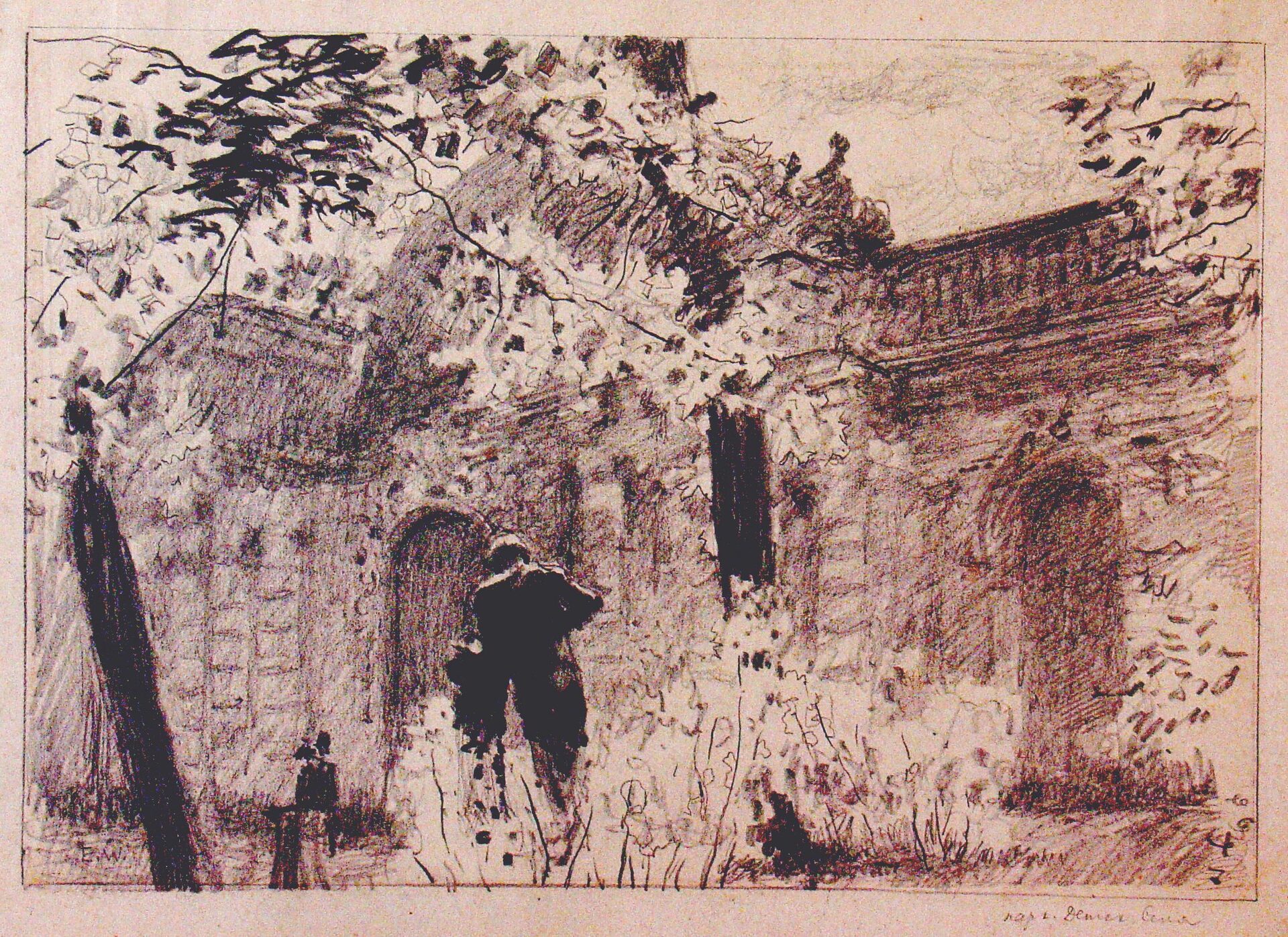
The park
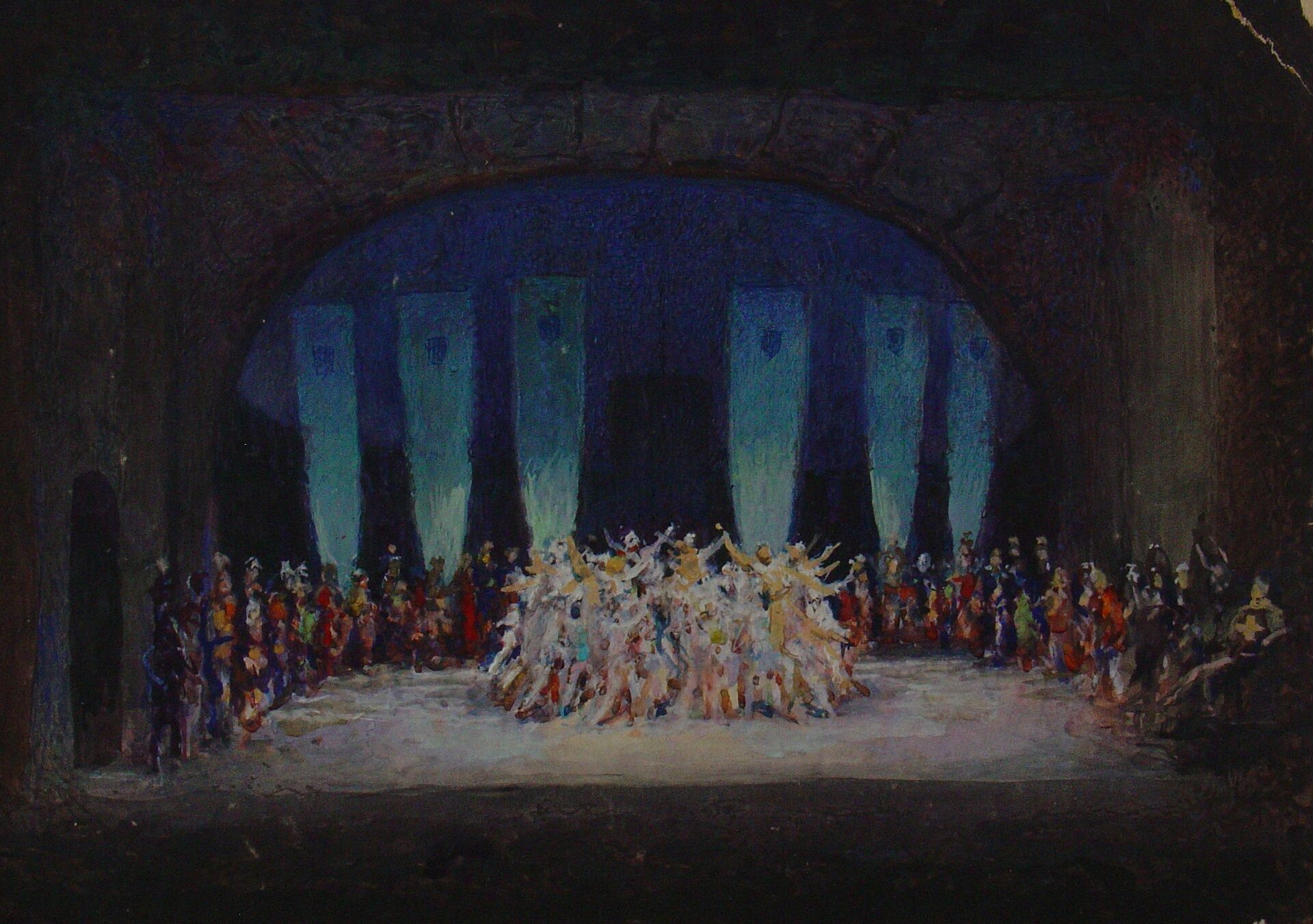
The theater
Glazunov
Vladimir Sofronitsky
Galina UlanovaPrima ballerina of the Kirov Theatre of Opera and Ballet in Leningrad and of the Bolshoi Theatre. St Petersburg State Museum of Theatre and Music. 1940
Catalog
Catalog of works
260 works made before 1917
The full catalog of paintings and drawings made before 1917: medium, dimensions, signatures, present locations and exhibition history. Searchable and filterable.
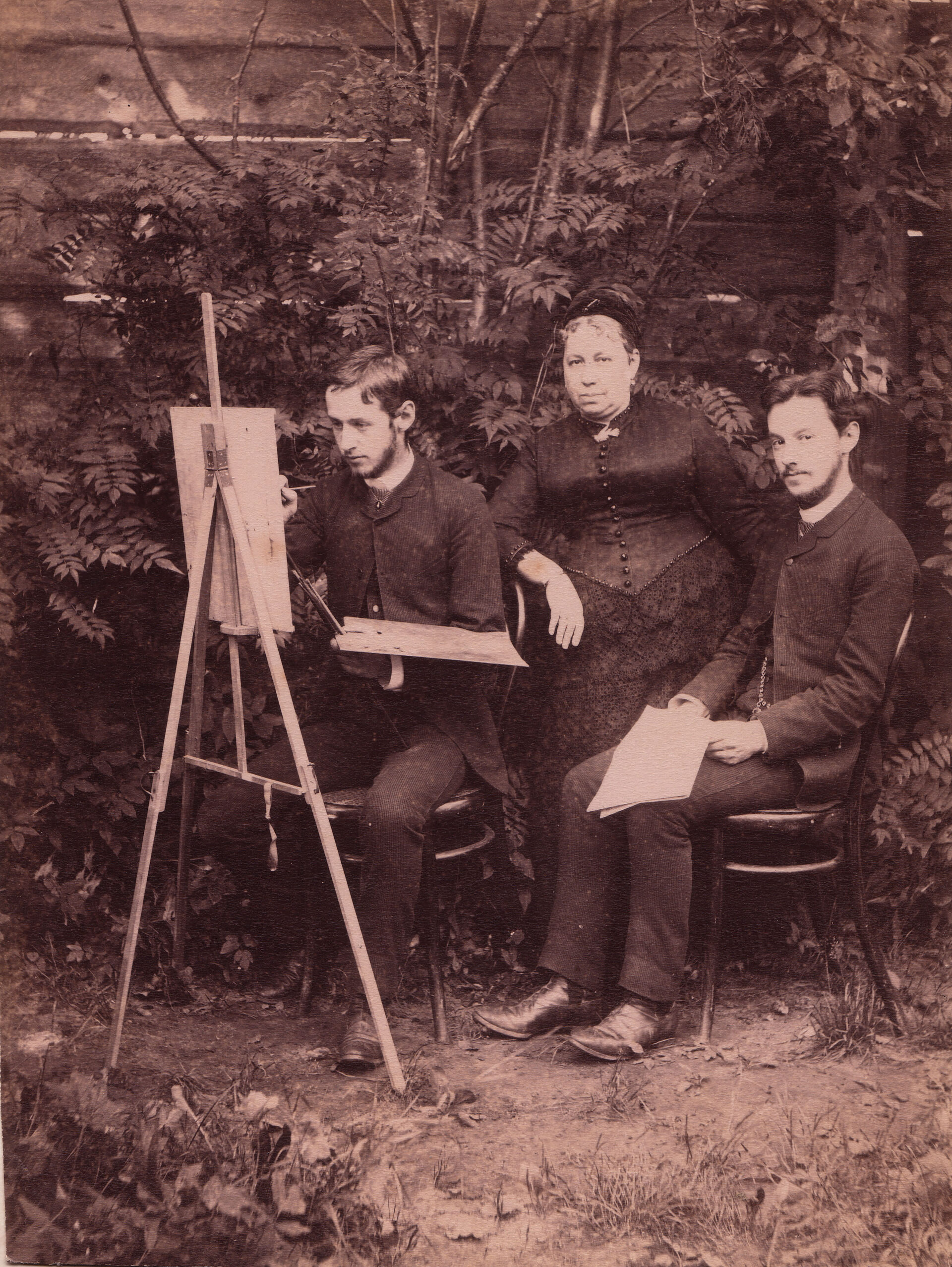
Emil Wiesel with his mother Maria Frantsevna Pointein and his brother Oskar Oskarovich Wiesel
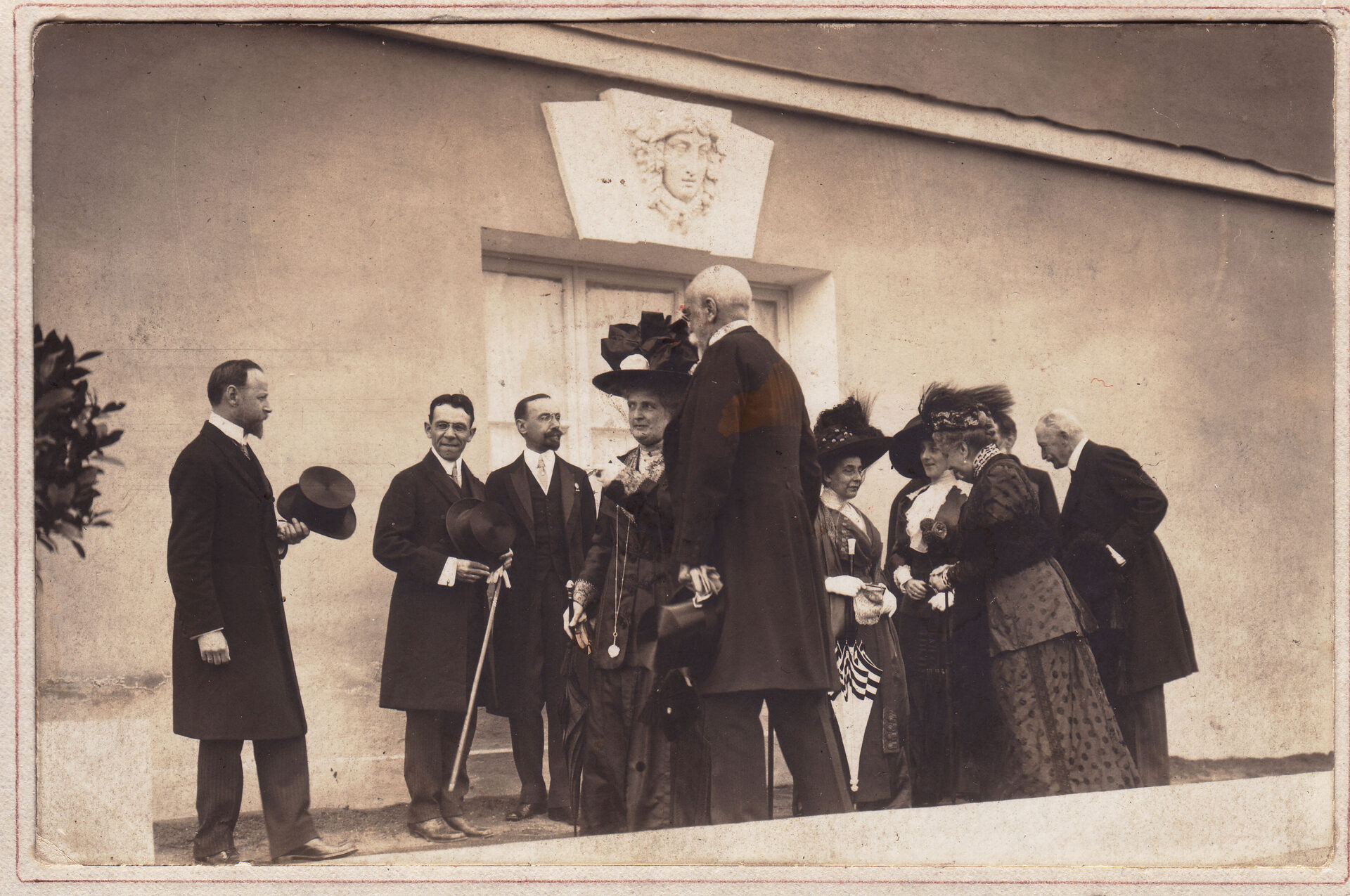
Emil Wiesel being presented to the Queen of Italy
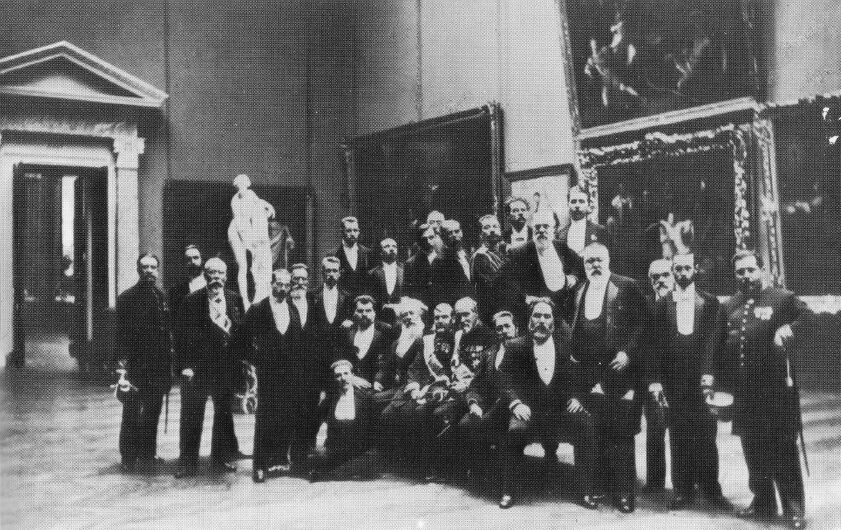
Emil Wiesel at the opening of the Russian Museum (second from the right)
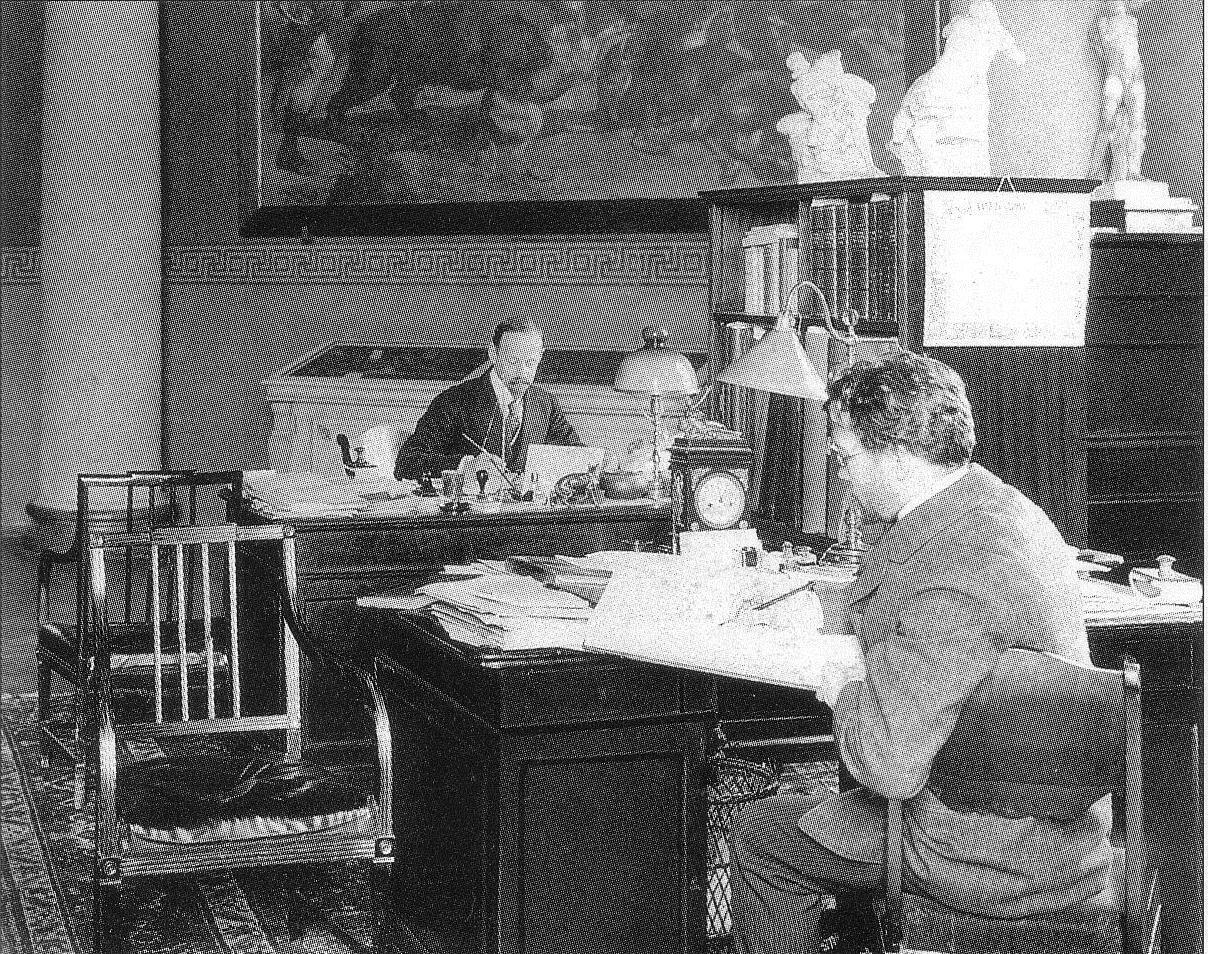
Emil Wiesel at work in the museum of the Academy of Arts
Emil Wiesel with his friend A. I. Vyshnegradsky
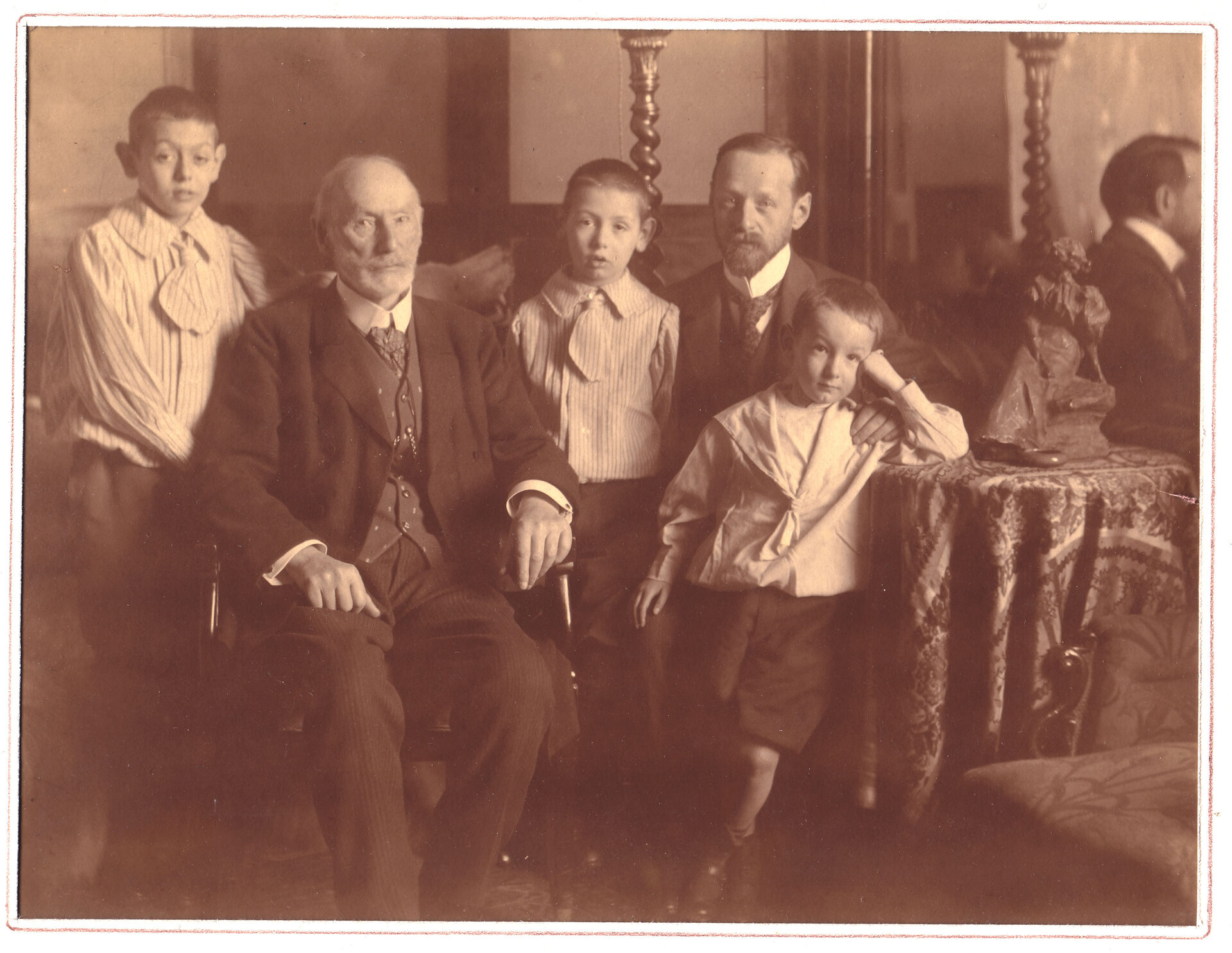
Emil Wiesel with his father Oskar Bernhardovich Wiesel and his children
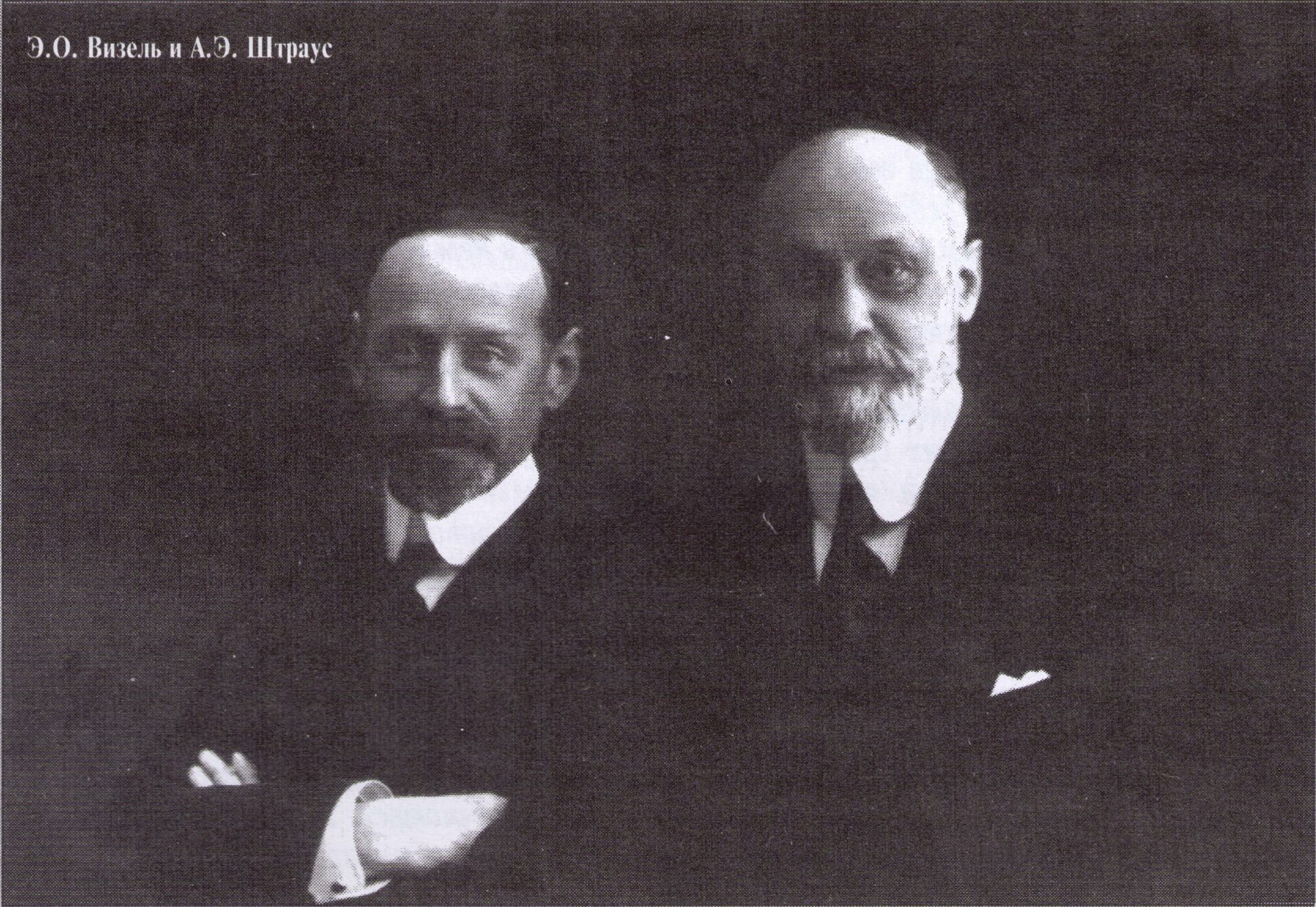
Emil Wiesel with his cousin Anton Emilievich Strauss
Documents
Letters
13 correspondents
I. I. EndogurovPainter, friend · 1893 — late 1890sLetters from Paris, where Endogurov was looking for a studio and urging Wiesel to join him. Wiesel’s portrait of Endogurov brought the painter his first recognition at the Paris Salon of 1894.+
October 21, 1893 · Paris, Grand Hôtel “Pavillon”
Dear Emil Oskarovich!
Last night I received your letter, which delighted me, particularly the passage about your Herr Professor and the fact that his departure may, and indeed must, result in your moving to Paris. I do not know how you sent the money, or which of your letters was posted first, but the money has not yet arrived; surely no catastrophe has befallen it!
In any case, many thanks for your kindness and attention.
Yesterday I managed to look over one studio. Not a particularly good one, with a microscopic little room attached, at 1,400 francs a year; this rather dismayed me, but I have not given up hope of finding something more suitable in both size and price.
You ask how my journey went? I can tell you that the train did not leave the rails; there were no collisions, but from the French border it arrived in Paris not at 4.20 but at half past eight. My traveling companions turned out to be fairly well-known operetta actors. We chatted almost the whole way, so the time passed quickly enough. I did not have my passport stamped, as it is not required.
Goodbye, dear Emil Oskarovich, I shake your hand warmly.
Entirely yours, I. Endogurov.
October 23, 1893 · Paris
Dear Emil Oskarovich!
The money has arrived safely, thank you again. Well, what have you decided? Did you write to Braz? In my view it would be better if you came as soon as possible, so that we could search, rent and settle in together; on my own I somehow cannot bring myself to decide.
Tkachenko and Grishchenko infuriate me by giving no sign of their existence, when they could be very useful indeed.
The most entertaining commotion is going on here today: the whole of Paris illuminated, a Venetian fête nautique on the Seine, and fireworks on the Champ de Mars.
Do decide, and decide quickly. I await your answer impatiently; until then, goodbye. I shake your hand warmly.
Sincerely fond of you, I. Endogurov.
On a visiting card
Undated, late 1890s · St Petersburg
Dear Emil Oskarovich!
I have finally decided not to send “Moonlit Night”; in its place I am sending “Girl with Geese”. Be so good as to see that no confusion arises. The price of the “Gänsemädel” is 600 crowns.
Sincerely devoted to you, I. Endogurov.
Source: Research and Bibliographic Archive of the Russian Academy of Arts, fond 37, inv. 1, item 60, ff. 3–6; private collection
A. EdelfeltFinnish painter · 1896 — 1900Ten letters about the Finnish section of the 1900 Exposition Universelle in Paris: lists of works, persuading owners to lend, insurance, and the commission for a portrait of the Emperor.+
December 31, 1896 · Helsingfors
Dear Monsieur Wiesel!
Let me introduce my friend Monsieur J. Ahqvist, art critic of the largest newspaper in Helsingfors; he wishes to speak with you about the Dutch paintings exhibited in St Petersburg.
I have only just returned to Helsingfors after two months in Sweden, which is why I kept you waiting for a reply to your kind letter. Please be so good as to keep the paintings returning from Berlin with you for a few weeks. I shall pass through St Petersburg on my way to Paris, and we can discuss sending them on to Venice. I shall take the opportunity to bring you the small portrait made for you.
Goodbye, dear sir; my sincere respects to Madame Wiesel, and cordial greetings to Monsieur Sokolov and all my friends who were so kind to me last winter.
Sincerely yours, Albert Edelfelt.
February 11, 1898 · Helsingfors
Dear Monsieur Wiesel!
The portrait mentioned above shows Madame Runeberg, wife of the engineer Runeberg, delegate for Finland in 1900. They live at 57 Liteiny. I have written to Madame asking her to let you have the portrait if she and her husband agree to its being exhibited. The frame is wooden, in the rococo style, and exceedingly fragile. I would ask you to advise your people to take every precaution.
I shall also have the portrait of Count Lekovalov (?) for the exhibition. But I do not know whether the young count, who owns it, and his sister, Baroness Meyendorff, who is copying it at present, will agree to lend it. Count Tolstoy might write a note to Madame Meyendorff (20 Sergeevskaya); that would have a great effect. If you wish, telegraph me, and I shall telegraph Madame Meyendorff at once.
As for the “woman in Champagne”, send her here, to Edelfelt’s address, 1 Mineralgatan.
How splendid that Repin has agreed to be commissioner of the Fine Arts Section in 1900! There is a great name that ought to win approval and unite everyone. We shall talk the matter over when I am in St Petersburg, which I expect will be in a few weeks.
My wife is in bed with laryngitis, nothing serious, but dreary all the same. I hope all is well with your family?
Allow me to present my respects to Madame Wiesel, to your father, to Count Tolstoy and to Monsieur Sokolov.
Devotedly yours, Albert Edelfelt.
June 11, 1898 · Paris
My dear friend!
As I leave Paris (I depart within the hour) I found the paper you sent me and which I had mislaid. It may be too late to collect the money now, since the Academy is closed. If you can obtain the sum after all, I ask you to send it to Borgå, Haiko, Finland, where I shall be in eight days.
I am traveling by way of Copenhagen, and then I shall take a sea voyage; perhaps I shall see you in Finland this summer?
I ask you to convey my deep respects to Madame Wiesel, and I wish you all a good holiday. Please give my friendly greetings to Sokolov.
Devotedly yours, Albert Edelfelt.
July 25, 1898 · Borgå, Haiko
Dear Monsieur Wiesel!
My endless thanks for your letter with the 150 Finnish marks, and I beg your pardon for not having been able to reply sooner. I was in Åbo for several weeks preparing my frescoes for the University (my subject is “Åbo”), and my letters were waiting for me here.
Where are you and what are you doing? I hope you are working, and that I shall see fine things from you in St Petersburg this winter.
Please convey my respects to Madame Wiesel, and I hope you and all your family are in good health.
Ever devotedly yours, Albert Edelfelt.
November 29, 1898 · Helsingfors
Dear Monsieur Wiesel!
I am late in answering your kind letter, because it took time to get replies from the artists, and even after writing to them and inviting them I can offer you only something approximate; I can say nothing definite about dimensions. There was talk of 70 meters of gallery wall for the Finnish paintings, which is the size of our usual exhibition hall. If that seems excessive we shall be content with less, but since we have not the faintest idea of the space that may be granted in Russia, we give you the maximum we normally have.
Most of the paintings are with their owners, who are very hard to persuade this time. Several artists, such as Gallén, Ahmberg and others, say they do not wish to send old work. It is very hard and thankless to prepare an exhibition a year and a half in advance; still, I hope things will go better in the spring.
I am working on illustrations and would give a great deal to be a little freer. Unfortunately publishers have no understanding whatever of the freedom of creative inspiration.
Diaghilev spoke of an international exhibition in St Petersburg in January. If it takes place I shall of course come, and then we shall see one another. The Count will give me all the necessary instructions regarding Paris, where I expect to spend several months in the spring.
I hope your family is well. My son is ten years old today (how time flies!); he is a big boy now.
Convey my respects to Madame Wiesel and to Count Tolstoy.
Ever devotedly yours, Albert Edelfelt.
October 8, 1899 · Helsingfors
Dear Monsieur Wiesel!
I asked Monsieur Runeberg to obtain certain details from you about the Exposition Universelle, but since he has written nothing to me yet, I make bold to approach you directly.
We shall be glad to send our paintings together with yours from St Petersburg. When do they need to be ready? You promised us 30 to 35 meters of gallery wall, for which we are most grateful.
As for myself personally, I have had several refusals from the owners of my paintings. Be so good as to ask Count Sheremetev for the “old singer”. That painting could leave St Petersburg with yours. I also spoke about the “washerwomen” with Monsieur Albert Benois. Do you think the Alexander III Museum will lend them?
We have not yet held a meeting of the jury; it will of course be difficult to make a properly representative selection.
When are you going to Paris? I intend to leave in the first days of January, but my family will only come in June, as my son attends the lycée. Who is the commissioner from Russia, and who will arrive in Paris first?
I have a great deal to do here: illustrations, about a hundred of which I must finish before the New Year, and the publishers are not joking.
So I shall have nothing new for the exhibition except the portrait of Madame Pasteur, widow of the great scientist. I am quite pleased with that canvas, painted in Paris in the spring.
I hope that you and all your family are well, and I ask you to convey my respects to Madame Wiesel, and my respects and friendly regards to Count Tolstoy and Mr Sokolov.
Devotedly yours, Albert Edelfelt.
December 10, 1899 · Helsingfors
My dear friend!
Our lists will be sent tomorrow evening by registered post. It was very difficult to complete them, as the members of the jury were scattered in different places. We did not know that the number was limited to ten. In most cases the entries were missing, the necessary signatures were absent, or at least the artists’ own signatures were. Is there any way of changing something in the list once the works have already been sent? I hope there is.
I have written to the Duke and to Count Sheremetev, but not knowing their answer I cannot mark this or that painting in the list. I asked the Duke to reply to Benois (to whom I wrote), and Count Sheremetev to reply to you by letter or telephone. If he says no, I beg you to ask him once more to lend the painting. I am most unhappy, since my large decorative paintings are not finished and I attach great importance to the “old singer” at the Paris exhibition. My friends advised me to send precisely that canvas.
I must go to Nordström to draw up the lists. We shall work all night. We shall not give details such as “pupil of so-and-so”, since many of our artists were taught by unknown masters or by nature herself.
Write to me when the lists reach you. My respects to Madame Wiesel and to Count Tolstoy.
Ever yours, Albert Edelfelt.
December 11, 1899 · Helsingfors
My dear friend!
Nordström and I worked in the hope of getting the lists off this evening, but we ran into unexpected difficulties and shall send them only tomorrow, Tuesday afternoon, so that they will nonetheless be in St Petersburg before 13 December. It has proved impossible to find information about the awards received in Paris: the commissioner of 1889 is not here at present, and we searched the old newspapers in the library in vain. Nor is it possible to find the old catalog of the Champs-Élysées salon; all the Finns exhibit in Paris on the Champ de Mars.
What is truly distressing is that we are not certain of receiving all the paintings we have declared. The owners are very mistrustful, and I do not know what further anxieties lie ahead in Paris. If I did not have so much work I would go to some of them myself to persuade them.
I hope Count Tolstoy will not be angry with us for the delay. We shall send the pink and white lists without any signatures, as Count Tolstoy wrote. If there is any misunderstanding, I beg you to write or telegraph me and to send the lists back, indicating the error if need be.
Devotedly yours, Albert Edelfelt.
January 17, 1900 · Helsingfors
My dear friend!
I thank you for your telegram and for your letter, which followed it to confirm it. I have now been able to reassure the committee for the time being. But until our modest conditions are finally confirmed I can do nothing about packing and dispatch. If we cannot exhibit as a group, that is as our own school with all the Finnish paintings together, I shall have not a single painting to send; all the artists made that an absolute condition of lending their works to the exhibition.
But I hope all will be well and that I shall receive a favorable answer in the next few days. I was so glad to learn that Count Tolstoy is also in favor of grouping the exhibitors by school, and I know that his word carries weight.
Do you know anything about the receipt of the paintings in Paris? Is it we (and not the General Commissariat) who must take delivery of them at the Palace of Fine Arts? In that case I shall bring Nordström with me, as I have very little experience in purely practical matters. I must also finish the portrait of the Emperor before my departure.
The guarantees are secured. We have insured the paintings for dispatch at 125,000 francs, and those we receive in Paris at 50,000 francs.
Goodbye, my dear friend; convey my respects to Madame Wiesel, and to Count Tolstoy my sincere, respectful and profound thanks.
Ever devotedly yours, Albert Edelfelt.
February 27, 1900 · Helsingfors
My dear friend!
I was greatly distressed to learn that you have had so much trouble and work with our poorly completed forms. I wanted to fill them in fully, but the other participants, who have more practical experience than I, assured me that a general summary would suffice. I hope all twenty-five of our crates will arrive safely in Paris together with yours.
I leave on Friday evening, and on Saturday at two o’clock I shall be with Count Tolstoy and with you. I shall thank you for everything you have done for me, and ask you when you expect the paintings to be in Paris.
It is most awkward of me to trouble you again at the last moment over one matter. I cannot read the name of the person who signed the letter from the Ministry of the Imperial Court commissioning the portrait of the Emperor. The portrait is finished. I should like to write to the client in order to receive payment. Could you ask Count Tolstoy whether the account may be sent to the Academy and paid to me through the Academy?
The sum in question was 5,000 francs. It was on Count Tolstoy’s recommendation that the commission came to me, and he knows whom to approach.
Goodbye, my friend, and until we meet soon. Please convey my best wishes to Madame Wiesel and to Count Tolstoy.
Devotedly yours, Albert Edelfelt.
Source: Private collection. Letters in French; translated into Russian by R. E. Bogomazova and E. Yu. Mingaleeva
L. O. PasternakPainter · 1900Thanks for news of the Luxembourg Museum, and a refusal to send illustrations to London.+
L. O. Pasternak to E. O. Wiesel
November 6, 1900 · Moscow
My heartfelt thanks to you, deeply respected Emil Oskarovich, for the good news I read in your dispatch today about the Luxembourg. I am very, very grateful to you and beg you to forgive me for confining myself to an open letter, as I am in great haste. I consider it a great honor!
And yes! I shall not send the illustrations to London, although I have received the owners’ permission. I fear for the safety of the works, and besides it is late and troublesome. I have sent my photographic facsimiles there instead. Thank you once again.
Health and success to you, yours, Pasternak.
Source: Private collection. Postcard
RKR.-I. KrestianpolTeacher of drawing · 1900A request passed on by visiting card during the Exposition Universelle in Paris.+
1900 · Paris, Exposition Universelle
Might I be permitted, most respected Emil Oskarovich, to approach you with a most humble request: to recommend to me someone of your acquaintance, Russian or French, who would on some terms undertake to read my short paper on my proposed method of teaching drawing at the congress of drawing teachers to be held in September. Or perhaps you will advise me to drop the idea.
In general I should be deeply grateful if you would allow me to speak with you for five minutes at your home or here, if of course it is no trouble to you.
Forgive my importunity: I intend to leave tomorrow or the day after.
With deep respect, your obedient servant.
Source: Private collection. On a visiting card
K. K. PervukhinPainter · 1900 (?)Two notes left with the porter during the Exposition Universelle in Paris.+
Undated · Paris
Dear Emil Oskarovich,
Do drop me a couple of words and leave them with your porter, saying where and how it would be best for us to meet. The day before yesterday, when we arrived, I tried in vain to find you, or at least Kudryashov, at the exhibition.
Has Alexandra Emilievna arrived? I hope you traveled well? Our greetings to her. I shall call on you in the evening, that is, on the porter, to collect a note.
Many thanks for your trouble, K. K. Pervukhin.
Undated · Paris
What a dreadful pity that you did not find us in. I was already at the exhibition by then, and S. A. had only just left the house…
Source: Private collection. On visiting cards
KKK. KuznetsovPainter · Early 1900sBrief notes about renting a studio and settling accounts.+
Undated
Emil Oskarovich, of course you may send the money by post; here is my address: Concarneau, Finistère, Hôtel Le Clinche. I shall send the receipt back by post the same minute.
Kuznetsov.
Undated
Emil Oskarovich, they promise to have the studio ready by 15 April, and I have received the contract as well. So they will probably call on you on the 15th.
Kuznetsov.
Undated, Monday
Emil Oskarovich! If you like, we can discuss the studio tomorrow at the Restaurant de la Poste a few minutes after twelve, or else this evening at my home after half past nine.
With respect, Kuznetsov.
Source: Private collection. On visiting cards
V. VallgrenSculptor · 1902Instructions on what was to become of his bronzes, plasters and the marble “Echo” once the exhibition closed.+
V. Vallgren to E. O. Wiesel
April 11, 1902 · Paris
Dear friend!
Could you undertake to send all my small bronze statuettes (those exhibited at my place in Paris) by parcel post at the close of the exhibition?
As for the two plaster statues, and also the small marble “Echo” and the plaquette with the portrait of Madame Vallgren, I ask you not to send them either to Helsingfors or to Paris. I should like to leave them in Paris for the time being. Thank you in advance, and please accept, dear friend, together with our very best remembrances from my wife, my most sincere regards,
V. Vallgren.
Source: Private collection
RBR. G. BüchtgerPainter, Munich · 1902Two letters from Germany: requests concerning the Spring Exhibition in the halls of the Academy, and a frank account of poverty and homesickness for Russia.+
February 4, 1902 · Bozen
Good Emil Oskarovich!
I write to you in great grief. Our little daughter Olga died two weeks ago. That is also the reason I am writing to you from Bozen: I took my wife away from Munich to distract her thoughts. Here in Bozen I received a letter from the Academy with the papers for the spring exhibition. I know that without your kindness I should not have received those papers. Thank you for this new service.
To my regret, far too little time remains before the deadline to send works from Munich. Sending paintings from Munich to St Petersburg takes three to four weeks. But since five of my paintings are with the Moscow Society of Art Lovers, I have decided to try them at our Academy.
My requests, Emil Oskarovich, are these: first, be so kind as to look over the paintings together with Vladimir Alexandrovich and to select from them what in your opinion might have a chance of getting into the exhibition. The paintings are all small. The largest is 60 × 80 centimeters: it is “A Sunny Day”, a felled wood, and probably the best of them.
The others are: 2) “Girl with a Burden”, 3) “In the Wood by the Stream”, 4) “A German Working Woman”, 5) “A Jew”. Choose from them whatever seems to you worthy.
I shake your hand warmly in gratitude and friendship.
Yours, Robert Germanovich Büchtger.
February 9, 1902 · Munich
Good Emil Oskarovich!
We have returned to Munich. Well, one must get down to business and work.
I wrote to you that the Moscow Society of Art Lovers will send five of my paintings for the Spring Exhibition. I cannot give the exact dimensions; the largest canvas, the first, is 60 × 80 centimeters, the second 46 × 64, the rest smaller still. I have only two labels for attaching, which I enclose with this letter, and I ask you to write out and attach labels to the other paintings as well.
You know, Wiesel, I am dreadfully drawn to Russia. I have not the means for it. This past year has been a very bad one for me. I do not know what lies ahead; I have enough for two months more, and then what? I am sorry for my wife! I hope I shall yet manage to extricate myself from this critical position.
If it were possible to return to Russia for two or three months, to paint studies, it would help me greatly, refresh me and do my work much good. I would most gladly live in Russia, but how, with my ruined nerves. Here in Munich I am dreadfully sick of it; I live here only because the climate suits my health.
Forgive me for starting on this again; I have long known it leads nowhere, yet it keeps bursting out. Help where you can.
Yours, R. B.
Source: Private collection
M. V. DobuzhinskyPainter · 1909A request for the painting “Provinces of the 1830s” for the Russian section of the 10th Munich International Exhibition.+
E. O. Wiesel to M. V. Dobuzhinsky
April 14, 1909 · St Petersburg
Dear Sir, Mstislav Valerianovich!
Having had no answer from you to F. G. Bernstamm’s letter requesting your painting “The Provinces” (Union cat. no. 91) for the Russian section of this year’s 10th Munich International Art Exhibition, I approach you with the same request. Do not refuse to answer through the bearer, and better still, hand him the work itself, “Provinces of the 1830s”, together with the enclosed form, completed. (The insurance and sale prices must be given in marks.)
I ask you to send it with the bearer, because everything has already been packed and dispatched apart from the last crate!
I ask you to accept the assurance of my perfect respect, E. Wiesel.
Source: Private collection
V. A. SerovPainter · 1910 — 1911Twelve letters concerning the Russian section of the International Exhibition in Rome: lists of works, insurance, photographs for the catalog, and the return of the paintings to Russia.+
V. A. Serov to D. I. Tolstoy, E. O. Wiesel and F. G. Bernstamm
October 11, 1910 · Moscow
Most respected Count Dmitry Ivanovich!
I received your letter — thank you.
And so the “Union” has broken up…
I think it would be only fair to divide in two the space allotted to the “Union” in Rome as well.
For my part I can make room and give the St Petersburg group part of my own space, and that will be well.
I am thinking of exhibiting the following works:
Portrait of Princess Orlova (St Petersburg), canvas, 3 arshins wide. Madame Rubinstein (Paris), 3 arshins wide. Madame Akimova (Moscow), 1 arshin wide. The singer Tamagno (Moscow, Girshman), 1 arshin wide. Yuzhin–Lensky (Moscow), 3 arshins wide. Oliv (St Petersburg), 1 arshin. Monsieur M. Morozov (Moscow), 1.5 arshins. Monsieur Iv. Morozov (Moscow), 1.5 arshins. Madame Botkina (Moscow), which was at the Exposition Universelle in Paris, of a gypsy type, in a yellow dress, 2.5 arshins. “Head of a Woman” (St Petersburg, property of Count D. I. Tolstoy). “Peasant Woman in a Cart” (Moscow), 1 arshin. “Horses by the Sea” (property of Count D. I. Tolstoy), 1 arshin. “Cow, a Finnish Yard” (St Petersburg, property of Golenishchev-Kutuzov), 2 arshins. + “Peter” hunting, + “Elizabeth”, watercolors, property of Kutepova + “Catherine” and several drawings for Krylov’s fables.
The crosses indicate uncertainty, that is, the owners may refuse.
In a few days I leave for Biarritz for a month.
Address: Biarritz, Villa “Les Mouettes”, Zetlin — for me.
At your service, V. Serov.
December 1910 – January 1911 · Moscow
Most respected Count Dmitry Ivanovich!
…From the chairman of the bar I received a letter of refusal, against which I am writing an objection, but there is still hope — I speak of the Turchaninov portrait. So the following will certainly be there: 1) “Orlova”, 2) “Rubinstein”, 3) “Akimova”, 4) “Oliv”, 5) “Zetlin”, 6) “Tamagno”, 7) “Morozov”, 8) “Finnish Yard”, 9) “Horses”, 10) “Head of a Woman”, 11) “Peasant Woman in a Cart”, 12) “Dog”. Uncertain: “Botkina”, “Yuzhin and Lensky”, “Turchaninov”.
Should any fail, they can be replaced. There is a dry portrait of Romanov (an official of the Ministry of Finance) — in general, do not be unduly alarmed.
At your service, V. Serov.
March 16, 1911 · Moscow
Most respected Emil Oskarovich!
For good order I have to inform you that the portrait of Madame Zetlin has been delivered by its owners to Monsieur Bernstamm in Rome. Everything I intended to exhibit is therefore in place. I hope “Turchaninov” was released to you without difficulty.
At your service, V. Serov.
April 1911 · St Petersburg
Most respected Emil Oskarovich!
Three photographs were made for the catalog: of “Orlova” and “Rubinstein”, and of one head from the same “Rubinstein”.
I shall pay for the negative of that head and for twelve prints once the negative and the twelve prints have been sent to me.
I now have no wish whatever for the photographs of “Orlova” and “Rubinstein” to be in circulation at all, and therefore I shall ask that, once they have been printed in the catalog, those two negatives be either destroyed or sent to me before 5 June, new style, Hôtel du Quai Voltaire, Quai Voltaire, Paris.
V. Serov.
October 1, 1911 · Moscow
Most respected Emil Oskarovich!
Would you be so good and kind to me as to write and tell me: 1) when exactly does the Rome exhibition close? 2) when are the consignments of paintings expected back?
The point is that I have already written to Bernstamm in Rome that my works — “Orlova”, “Rubinstein”, “Zetlin” and “Tamagno” — must be with me by the middle of our November, in view of the “World of Art” exhibition, which this year opens in Moscow on the 15th to 20th of our November. I received a courteous reply (as always) from Bernstamm, saying he would do everything possible to arrange it, that is, to send them off on the 4th of their November.
Have you any information on this score?
Be so good as to write to me. In any case I need to know now whether I can count on these works for the exhibition in Moscow or not.
I have written to Bernstamm a second time asking him to telegraph, but there is still no answer.
All the best. At your service, V. Serov.
Moscow, Vagankovsky Lane, house no. 9, Klyukina.
I ask you to inform whoever it may concern that the Italian exhibition ends at the close of November, new style, and that I therefore now insist that all my works be sent back to Russia precisely at the end of November, new style; and I do not give my consent to any extension of the exhibition (about which, unlike others, I was not even consulted).
V. Serov.
V. A. Serov to E. O. Wiesel and F. G. Bernstamm
October 6, 1911 · Moscow
I address the secretariat with the most humble request to inform me — since I do not know who is in Rome at this moment, F. G. Bernstamm, E. O. Wiesel or Isakov — when the exhibition closes and when the consignments are due to be sent back to Russia. I must know this, as I need to be able to exhibit in Russia (at the “World of Art” exhibition in Moscow in the middle of our November) the portraits of: 1) Countess Orlova, 2) Zetlin, 3) Rubinstein and 4) Tamagno.
With regard to these works I would ask for your assistance in getting them to Russia as quickly as possible.
Do not refuse me an answer, I beg. V. Serov. Moscow.
Vagankovsky Lane, house no. 9, Klyukina.
F. G. Bernstamm to V. A. Serov
13 / October 26, 1911 · Rome
Most respected Valentin Alexandrovich!
I received your letter of 6 October today and hasten to inform you that, despite the Roman committee’s request to extend the exhibition until the spring of 1912, the Russian section will probably close, along with most of the others, at the end of December or the beginning of January.
As for the four portraits you mention, I shall enter into negotiations with the committee this very day and hope to be able to send them from Rome within a week, in the first days of November, new style.
Ever at your service, F. B.
V. A. Serov to F. G. Bernstamm
October 28, 1911 · Moscow
Most respected Fyodor Gustavovich!
I am most grateful to you for your willingness to meet my wish (to have “Orlova”, “Zetlin”, “Rubinstein” and “Tamagno” back in Russia as soon as possible); nevertheless I still do not know whether a decision on this has been taken at your exhibition. I shall ask you to telegraph me on receipt of this letter.
At your service, V. Serov.
Moscow, Vagankovsky Lane, house 9, Klyukina.
F. G. Bernstamm to V. A. Serov
4 / November 17, 1911 · Rome
Most respected Valentin Alexandrovich!
Your letter of the 28th arrived only today, postmarked the 31st; I telegraphed you at once. The crates left on the very day you were writing your letter.
They have been sent to St Petersburg, of which E. O. Wiesel has been notified. All the best. Ever at your service, F. B.
V. A. Serov to E. O. Wiesel
November 5, 1911 · Moscow
Most respected Emil Oskarovich!
I have just received a telegram from Bernstamm in Rome saying that my works were sent last week. My reproach to him was therefore unwarranted. I shall ask you to let me know when the works arrive in St Petersburg, and whether my presence is needed there at that time for the dispatch of these four works (“Orlova”, “Rubinstein”, “Zetlin”, “Tamagno”), or whether they can be sent to Moscow, to the School of Painting, Sculpture and Architecture, where the “World of Art” exhibition opens in the newly built exhibition premises, without me. Be so good as to write. Though in fact I could come myself; but do let me know, as I should not like to be too late — the exhibition opens here on 20 November.
Do not refuse me an answer. V. Serov.
I forgot to write that I am always at your service — my compliments. Moscow, Vagankovsky Lane, house 9, Klyukina.
V. A. Serov to E. O. Wiesel
November 7, 1911 · Moscow
Most respected Emil Oskarovich!
Thank you very much for the letter I received from you yesterday.
So, when you learn of the arrival of my works, do not fail to inform me — send a telegram.
All expenses concerning me will be reimbursed…
I probably owe a considerable sum for the hire of glass — but that can wait until this Roman exhibition is finally over. The customs charge for the frame of the Zetlin portrait I shall of course take upon myself.
Thank you once again. At your service, V. Serov.
On the envelope: St Petersburg, His Honor Emil Oskarovich Wiesel, Imperial Academy of Arts, Vasilyevsky Island. From Serov.
V. A. Serov to E. O. Wiesel
Between 7 and November 19, 1911 · Moscow
Please hand these 10 lire to Signor Benedetti for the crate for “Romanov” (it was not on his account). I would give more, but the crate is unreasonably large.
All the best. V. Serov.
Source: Private collection; Research and Bibliographic Archive of the Russian Academy of Arts
D. I. TolstoyCount, director of the Hermitage · 1910 — 1911Four letters from Wiesel to Count Tolstoy: preparations for the Russian section in Rome, the casting of sculpture, and insurance valuations for Serov’s works.+
E. O. Wiesel to D. I. Tolstoy
March 6, 1910 · St Petersburg
Most respected Count Dmitry Ivanovich!
I am again settled in St Petersburg and have just received your letter, together with a short one from F. G. Bernstamm enclosing a letter to you, which I forward. From F. G.’s letter I conclude that you will no longer find Shchuko in Rome, but that Stahlberg is likely to be there. Here the affairs of the Rome exhibition have not changed their phase: a few requests for plans from the provinces, and nothing more.
Meanwhile we have buried Kuindzhi and held a requiem for Grand Duke Vladimir with the August President.
Allow me to enclose the list for the issue of the Rome allowances, for your signature.
I sympathise with you greatly if, along with Switzerland, you must give up your “ascensions”.
I hope you have forgotten the migraine which is once again troubling me somewhat, and I ask you to accept my sincere assurance of respect and devotion,
E. Wiesel.
If you should meet A. V. Westman in Munich, it may amuse you to tell him that the August President was not best pleased that, besides the petition of the President of the Imperial Academy of Arts for Russian orders to be conferred on the Bavarians for the Munich exhibition, another petition was also submitted.
E. W.
June 25, 1910 · St Petersburg
Most respected Count Dmitry Ivanovich!
All is quiet and calm in our waters. The only thing I can report on the affairs of the Rome exhibition is that the Venus has been cast at the Hermitage; further, that the Moscow Society of Architects has elected F. O. Shekhtel (its chairman) as its representative for the Rome exhibition, the Imperial St Petersburg Society of Architects has elected M. M. Peretyatkovich, and the Society of Architect-Artists has elected V. A. Pokrovsky as its representative with O. R. Munts as his deputy.
That is all; there is no news from Fyodor Gustavovich apart from a letter to V. P. Loboykov on matters unconnected with Rome, which may perhaps indicate that tout va bien.
Sincerely respecting you, E. Wiesel.
July 5, 1910 · St Petersburg
Dear Sir, Dmitry Ivanovich!
Allow me to thank you for the two most recent letters I received, from Kagorlyn and from Riga. I have just received another letter from F. G. Bernstamm enclosing a letter to you. To this I can add that a telegram was received yesterday from Rome saying that Bernstamm and Shchuko are leaving Rome on Wednesday the 7th — Bernstamm for Munich and Brussels, Shchuko for Vicenza and Berlin.
The matter of the Mining Institute group, that is, their casting, is proceeding normally: one has already been cast and delivered to Kuznetsov’s workshop, the other is beginning to be covered with plaster and will likewise be at Kuznetsov’s workshop in three weeks. I must say that the first group, from which the mould has already been taken, has gained in appearance by at least a hundred per cent compared with its former state and with the other figure. I think that a good deal of the layers of paint came away during the casting, and the sculpture emerged. I have not seen the plaster cast, but according to the caster it is good, that is, better than the original’s former appearance.
As there is at present a complete absence of current business concerning Rome, I have decided to leave tomorrow evening for the country and shall return when Fyodor Gustavovich comes for a couple of days so that I may see him. In any case Sergei Konstantinovich Isakov remains here to guard the Museum and the rest of the business (including Rome).
I hope these arrangements will meet with no objection on your part.
I ask you to accept the assurance of my perfect respect, from one who sincerely respects you, E. Wiesel.
January 16, 1911 · St Petersburg
Most respected Count Dmitry Ivanovich!
I enclose herewith the originals of the letters from Repin and Malyavin (copies have been taken). Then, regarding the letter to the Italian consul Bon… in Odessa, for signature, if it will do.
Then I would very much ask you to help determine the sums for which Serov’s portraits and paintings should be insured — perhaps his letters to you contain indications of prices (in marks)?
<From the collection of> Serov: Portrait of Akimova — ? Portrait of Oliv — ? Portrait of Rubinstein — ?
<From the collection of> Count Golenishchev-Kutuzov: Peasant Woman in a Cart — ? Finnish Yard — ?
Yours: Head of a Woman — 500 roubles Little Horse at the Gate — 700 roubles
We already have Nesterov’s letter with prices. I received a note from Bernstamm in which he again writes that the opening of the exhibition will “probably” be postponed. He then asks to be told the total cost of insurance by telegraph (a telegram which, in my view, he must already have received by now, after I sent this letter). Then personal matters, and a mention that he is writing you a report.
I am awaiting Shchuko for the expedition to the Museum and the Salt Town to fetch the plasters. I ask you to accept the assurance of my most perfect respect and devotion.
E. Wiesel.
P.S. One more question: may Thérèse Riss (?) be told whether to send her “Caduta” to Rome, and whether it will be exhibited there — may we answer in the affirmative? E. W.
Source: Private collection; Manuscripts Department, National Library of Russia
OWO. F. WaldhauerClassical archaeologist, the Hermitage · Mid-1910sA request to allow a researcher access to the plaster casts of antique portraits in the museum of the Academy of Arts.+
Undated · Petrograd
Most respected Emil Oskarovich,
Natalia Evgenievna Garshina is working on sculpture of the age of the Roman emperors; for her research she will need to compare the plaster casts of the portraits in more detail. I should therefore be very grateful to you if you would allow Natalia Evgenievna to take the busts within the scope of her research down from the shelves from time to time and set them side by side. I venture to hope this will prove possible, all the more so since your museum is now arranged so conveniently for scholarly work.
With perfect respect, devotedly yours, O. F. Waldhauer.
Source: Private collection. On a visiting card
ASA. D. SchwarzmanOn behalf of V. V. Mate · 1910sA note about handing over eleven etchings by the engraver V. V. Mate for the exhibition.+
Undated
Alexander Danilovich Schwarzman asks Monsieur Wiesel to accept, on behalf of V. V. Mate, eleven of his etchings sent in for the exhibition. If you have not forgotten, I already mentioned them on the day the exhibition was consecrated.
At your service, A. Schwarzman.
Source: Private collection. On a visiting card
Film
Documentary film
Emil Wiesel: painter, museum curator and full member of the Imperial Academy of Arts.
“…Art is the most desirable, the most fragrant flower of culture. But like any flower it is by its very nature fragile, and that is why, from far-off times, the efforts of mankind have been directed at protecting it by every means, carefully gathering up even the petals that misfortune has stripped away…”I. E. Grabar
Russia’s artistic heritage, a particular source of national pride, was built up over centuries through the finest creations of gifted individuals and of various schools, groups and associations. Russia’s artistic dynasties undoubtedly played, and continue to play, a large part in the formation of this visual culture. It is well known how enormously important the Bryullov, Sokolov, Makovsky and Benois dynasties were in the cultural life of the country. The handing down of traditions from generation to generation, the particular cultural atmosphere of each creative family, and the circle of acquaintance that invariably formed around such dynasties are elements of Russian artistic life without which it would be hard to understand how that life developed, or to sense the full depth of the cultural layer of Russian art.
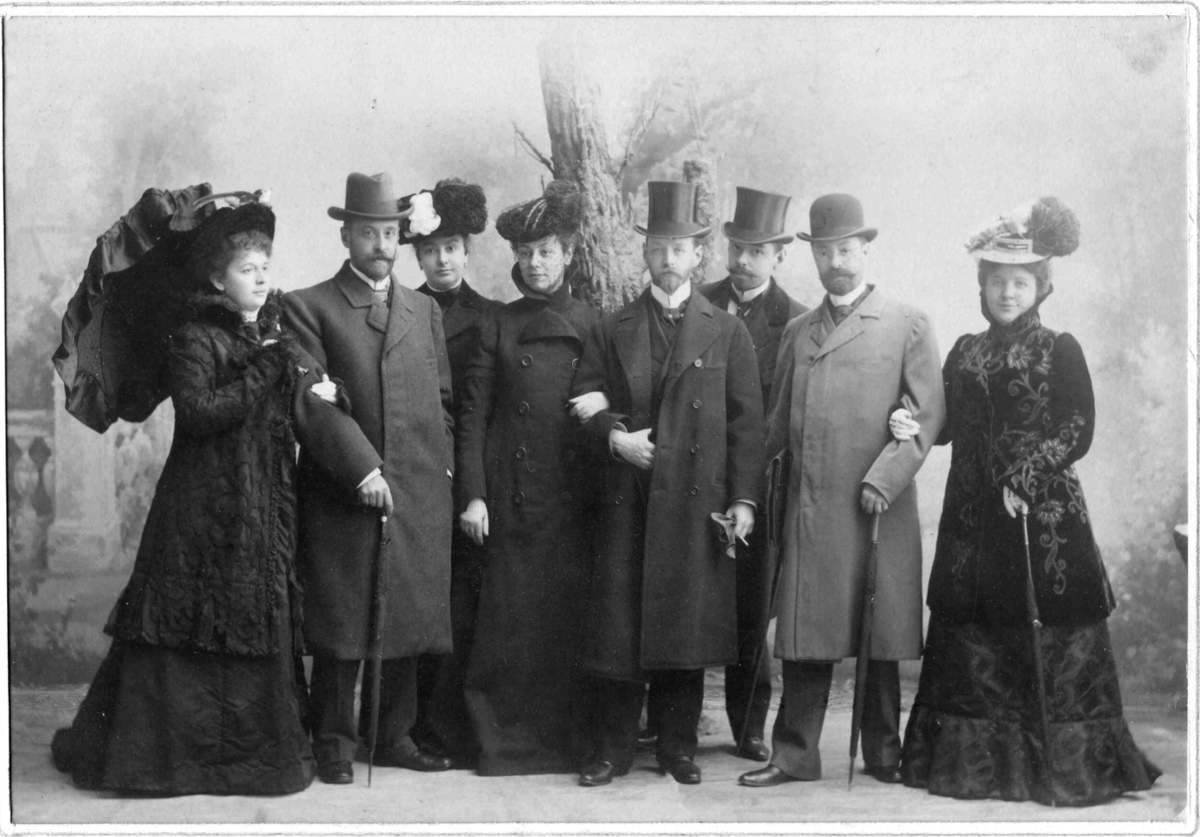
Emil Oskarovich Wiesel and Alexandra Emilievna Wiesel-Strauss (center) among relatives
Yet among Russia’s celebrated artistic families there are also little-studied dynasties which are of no less interest and deserve the close attention of art historians and of scholars of the country’s contemporary artistic life alike. One of these is the Wiesel dynasty, a distinctive cultural and historical phenomenon in Russian art of the nineteenth and twentieth centuries.
What makes this family unusual is above all that for more than a century and a half its involvement with the fine arts has never been interrupted. From the middle of the nineteenth century to the end of the twentieth, no fewer than five generations of Wiesels worked, and continue to work, in the visual arts with considerable success, maintaining high taste and genuine artistry.
The roots of the Wiesel family lie in Europe; the name is of German and Austrian origin. The family is first recorded in Russia at the beginning of the nineteenth century, when the first of the Russian Wiesel forebears, Bernhard-Lorenz Wiesel, born in 1800 into a merchant’s family (probably in Bohemia), came to Russia as a trained physician and settled in Kremenchug in Poltava province. So began the history of the Wiesels in Russia. Four generations of the family lived and worked in Kyiv and St Petersburg; three further generations now live in Kazan. Many members of the family became professional artists after formal training.
Despite all the personal and historical upheavals of their time, and especially of the twentieth century, when this family, like many Russian families, passed through wars, revolutions, repression, exile and prohibition, a fairly extensive collection of the dynasty’s artistic heritage has survived. Besides the family circles in Kazan, St Petersburg and Moscow, where a significant part of the collection is kept, works by members of the family are held in museums and collections in a number of Russian regions.
The distinctive character of the Wiesel collection, very typical of the private holdings of artistic dynasties, lies in the fact that it was not assembled deliberately, with a conscious selection of works and with the particular aims and objectives one can often trace in the collections of professional collectors. Having brought together almost everything produced by the masters of this dynasty, from small pencil sketches to finished works of a high artistic level, the collection today comprises some 2,500 works of painting, graphic art and the decorative arts. Settled within the family circles of the Wiesels, it continues to grow with works by descendants who are working creatively today.
Emil Oskarovich Wiesel
Emil Oskarovich Wiesel
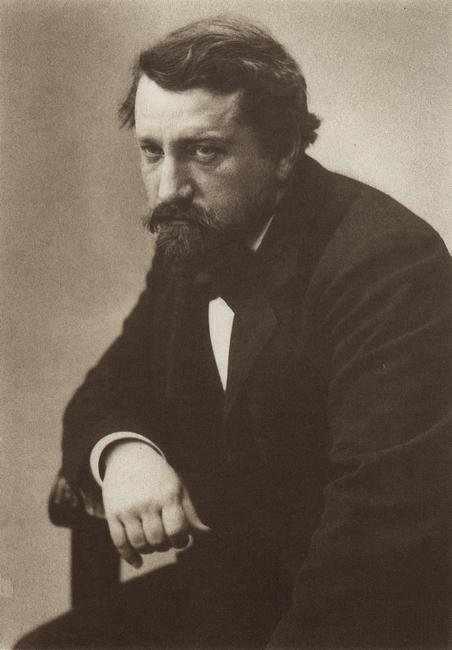
The central figure of the Wiesel dynasty is the academician of painting Emil Oskarovich Wiesel (1866–1943). Wiesel was one of the prominent public figures of Russian culture in the late nineteenth and early twentieth centuries. His whole career was bound up with the St Petersburg Academy of Arts, where for some thirty years he was curator of the academy museum, and later worked at the Hermitage as curator of the department of drawings. On his initiative the Academy Museum was partly reorganized: he created new departments, established a department of casts of antique sculpture, and drew up new statutes for the museum. He helped to found museums in twenty-three Russian cities, and served as commissioner for the Russian side in organizing the Russian art sections at the international exhibitions in Paris, Munich, Brussels, Rome and Turin. For these services Wiesel repeatedly received the highest awards from both the Russian and foreign governments. In 1912 he was elected a full member of the Academy of Arts. A number of unique documents attesting to these awards have survived in the family collection and in the archive of the Academy of Arts.
The French Legion of Honor, awarded to E. O. Wiesel for organizing the Russian art section at the Exposition Universelle in Paris, 1900E. O. Wiesel and I. I. Endogurov in Cormon’s studio in Paris, 1893–1894
After the revolutionary events of 1917, Wiesel was, on the instruction of A. V. Lunacharsky, appointed to the expert commission of the museum department of Glavnauka, and was considered one of the finest experts on Russian and Western painting and sculpture. Besides his intensive museum, expert and exhibition work, Wiesel pursued interesting research at the meeting point of science and art: in 1930 he delivered a paper, “Visual Perception and Its Relation to Painting”, at the fine arts department of the Institute of Art History.
While engaged in such important public work, Wiesel never abandoned art throughout his life. Having received a broad and varied education in painting, drawing and architecture, from the St Petersburg Academy of Arts to the European schools of Munich and Paris (in Cormon’s studio), he worked with enthusiasm and took part, as a painter and graphic artist, in numerous exhibitions at home and abroad. He first won recognition as an artist at the Paris Salon in the spring of 1894, where his portrait of the painter I. I. Endogurov was shown.
Wiesel’s creative legacy makes up the greater part of the dynasty’s family collection: roughly 1,500 works in painting, graphic art and watercolor. His works are also held in various museums in St Petersburg (the State Russian Museum, the State Hermitage, the Museum of the History of St Petersburg, the Pushkin House Museum, the Theatre Museum, the Mariinsky Theatre Museum and others), as well as in Moscow, Saratov, Kazan and Klin.
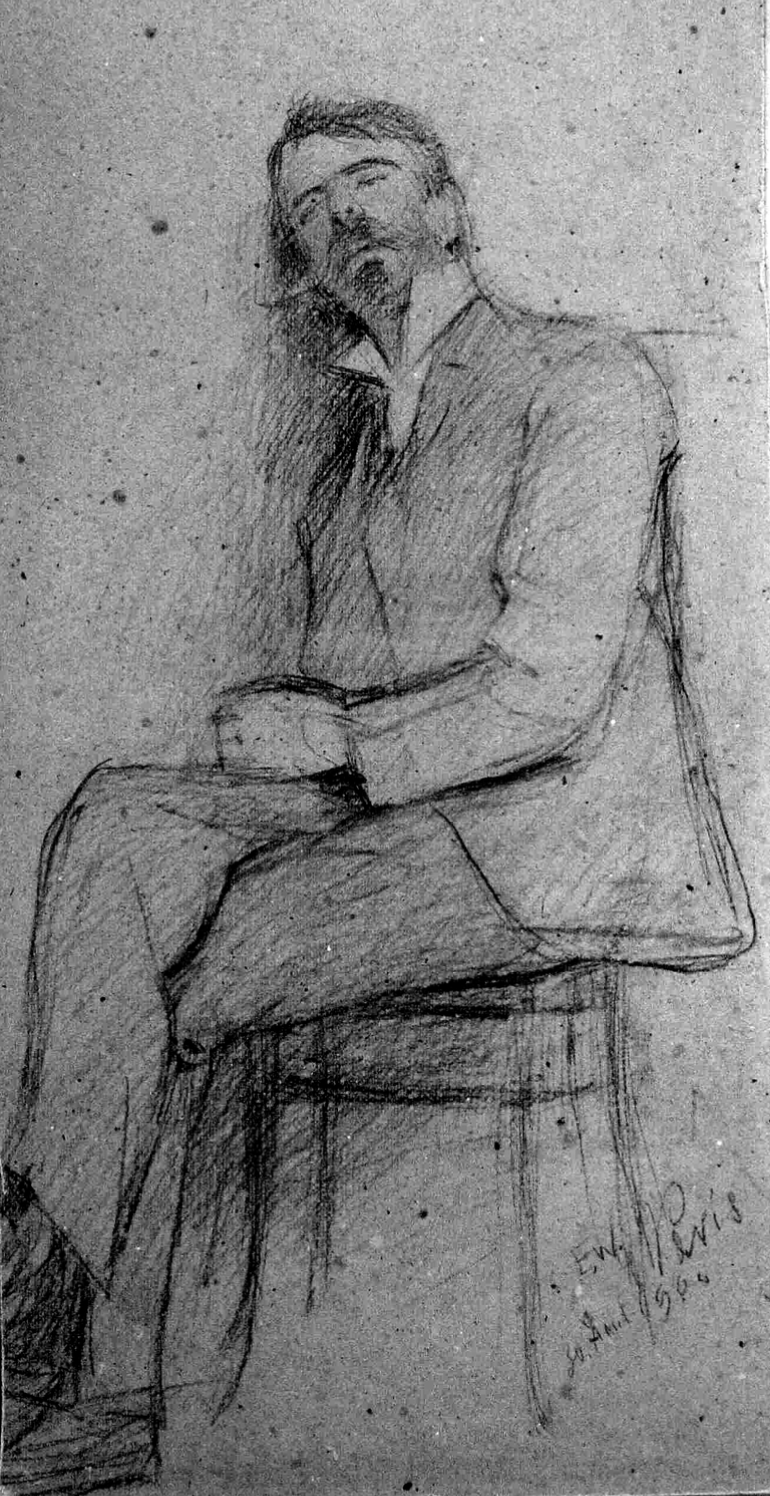
Study for a portrait of I. E. Repin. Late 1890s. E. O. Wiesel
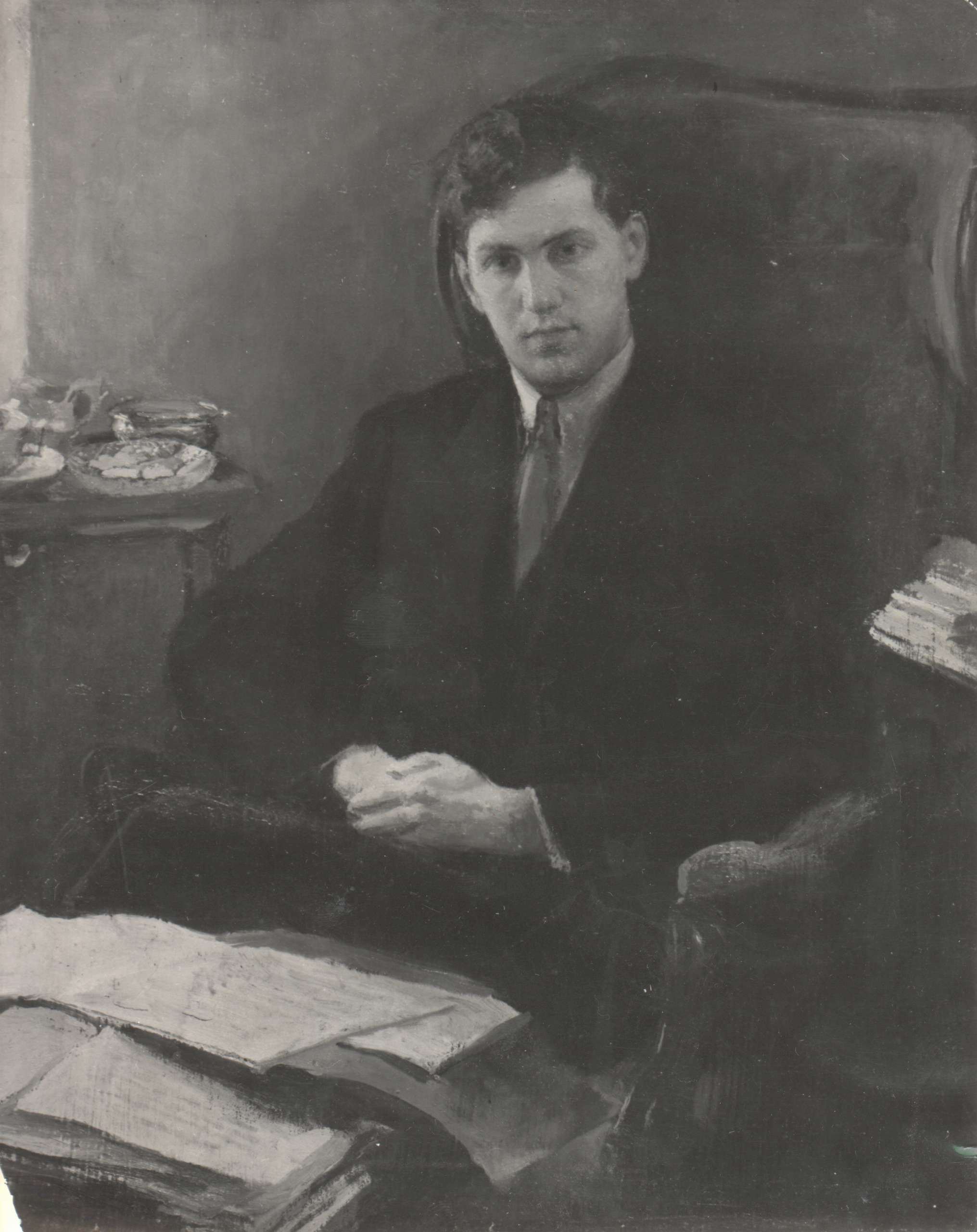
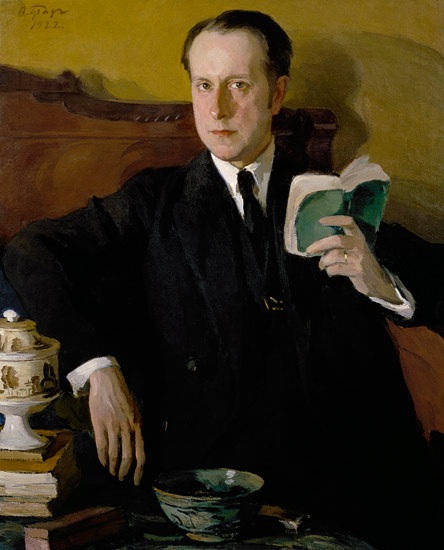
A fine portraitist, Wiesel produced a series of painted portraits of figures from the arts and music, of scholars and of actors. His watercolor portraits are executed with virtuosity and show a sound command of the older academic techniques, in particular the stipple technique in watercolor. Among them, the watercolor portraits of members of the imperial family (held in the scientific archive of the Russian Academy of Arts) and the many portraits of the Wiesel family circle are notable for their refined taste and skill. The artist took an unconventional approach to his painted portraits of Lenin, which are held in the State Historical Museum.
Wiesel’s work is marked by a variety of techniques and materials: oil, watercolor, gouache, ink, sepia, black chalk and graphite pencil. A significant place in his output is held by the drawings of the 1920s and 1930s, made in the free, impressionistic manner characteristic of him. These are above all views of St Petersburg and its surroundings, in which one senses the artist’s particular feeling for his native city; views of other places recorded as impressions of interesting journeys; multi-figure sketches of various meetings and sessions; and pencil portraits of his friends, colleagues and family. In them the artist shows most clearly his sincere interest in everything going on around him, his life-loving and active nature, and his fresh eye for the most varied aspects of life.
He devoted much time and energy to the theater, making all manner of sketches of performances in the theaters of St Petersburg and Leningrad: scenes from productions, actors in various roles, and rehearsals of many operas, ballets and dramas.
The whole of Wiesel’s creative life, filled with fascinating events, encounters and intense activity in the most varied fields of the visual arts, is one of the bright pages of Russian cultural life in the late nineteenth and early twentieth centuries. In his private life he was surrounded by people close to him, close both by blood and in spirit.
The family
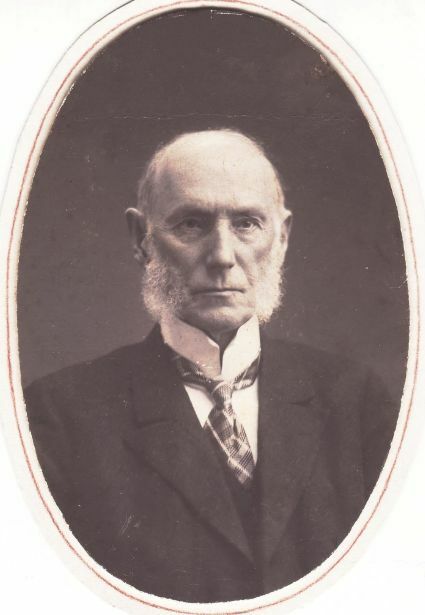
Oskar Bernhardovich Wiesel, official of the Ministry of Finance, actual state councillor, father of E. O. Wiesel
Not all members of the Wiesel family were professional artists. Oskar Bernhardovich Wiesel (1827–1916), the father of Emil Oskarovich, held the rank of actual state councillor and served in the Russian Ministry of Finance, traveling repeatedly to Berlin, Amsterdam and Paris on ministry business by imperial decree. He had no special artistic training, but undoubtedly had a leaning toward the visual arts. He is represented in the collection by only a few watercolor sheets, two of which appear to be finely executed copies of works of the European Romantic school.
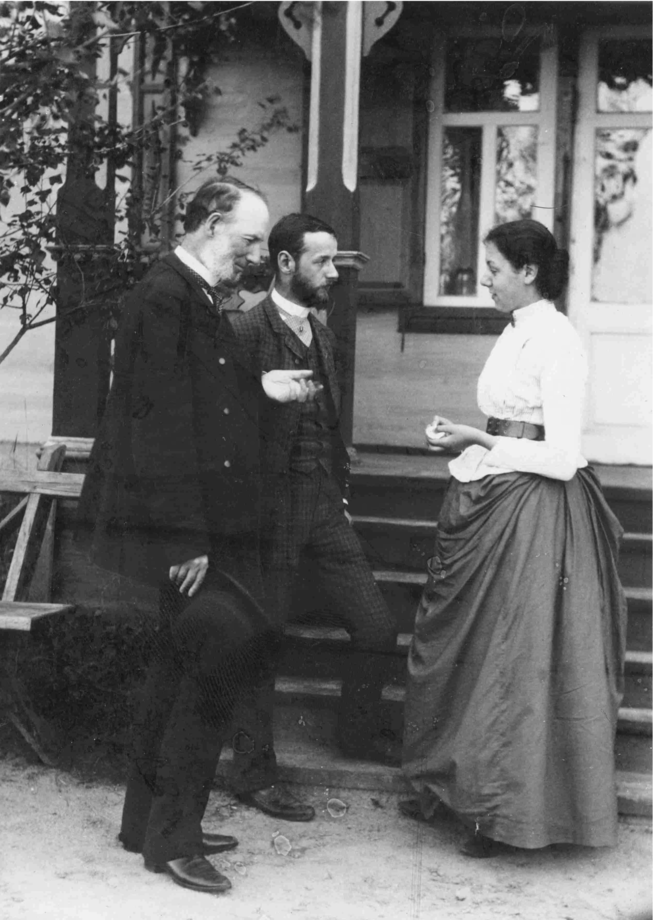
O. B. Wiesel, E. O. Wiesel and A. E. Wiesel-Strauss, 1890s
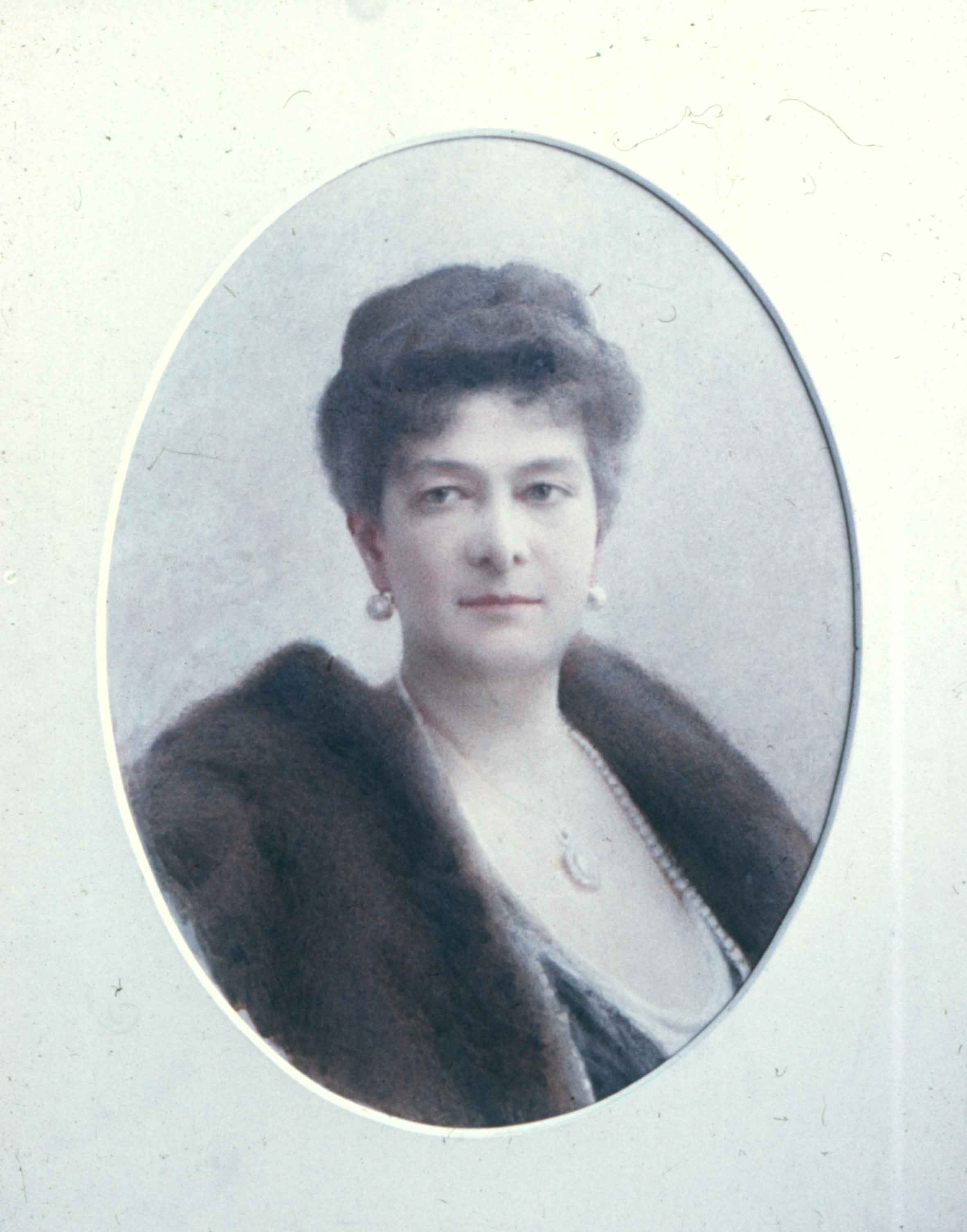
Alexandra Emilievna Wiesel, née Strauss (1866–1939), the wife of Emil Oskarovich, showed remarkable ability in the fine arts while still at her gymnasium in Kyiv. Her attraction to art was so strong that, after her parents’ death and on finishing school, she set off for St Petersburg, where she entered the school of the Society for the Encouragement of the Arts in the applied arts division. Her specialities were porcelain painting and woodcarving. She received a medal for her diploma work, an extremely difficult copy in color on porcelain of Kramskoy’s “Head of Christ”, a work which had never been exhibited and remained in the artist’s studio as a symbol of his moral searching. The young artist had to carry out several hundred cycles of painting and firing to achieve color as close as possible to the original. The skilfully executed carved wooden frame for the work was also made by her and formed part of the diploma.
Only a small number of works by A. E. Wiesel-Strauss survive. These are watercolors (student still lifes and a view of a Paris street), porcelain painting (a masterly copy of a fragment of Velázquez’s “Coronation of the Virgin” in a carved frame of her own making), landscape and ornamental painting, and beadwork embroidery. These are mainly works of her early years, from her time at the school of the Society for the Encouragement of the Arts in the 1890s, since she devoted the rest of her life to her husband and children, becoming for them not only wife and mother but friend and adviser, supporting all their undertakings.
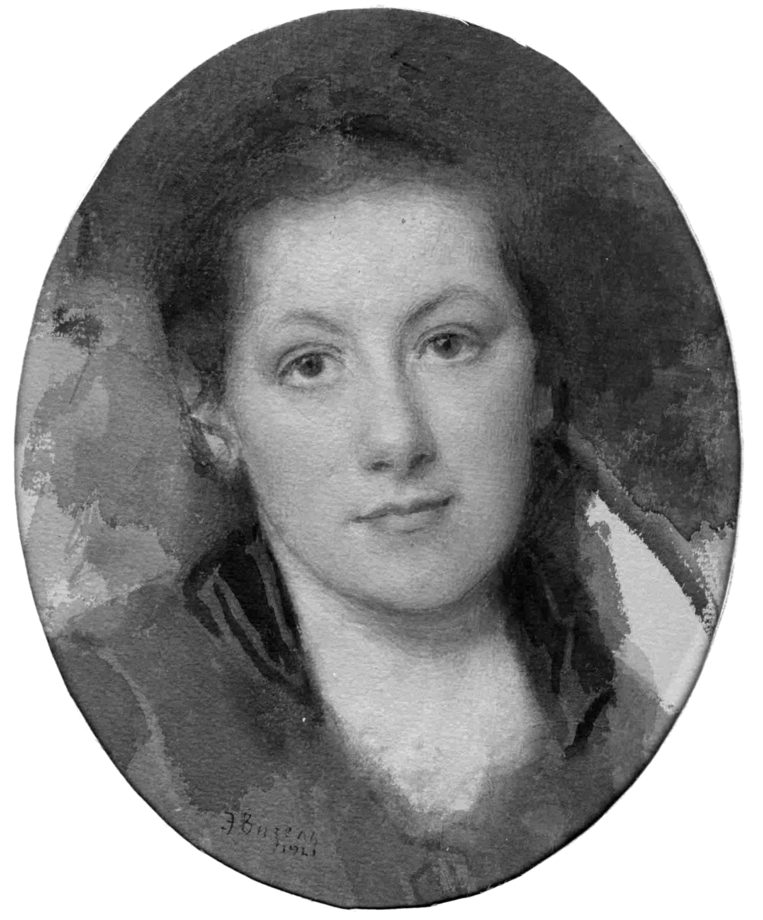
Portrait of the artist’s daughter A. E. Wiesel (by E. O. Wiesel, 1921)
There were five children in Wiesel’s family. Two daughters, Alexandra and Tatyana, received a professional artistic education and were connected with the arts all their lives.
Alexandra Emilievna Wiesel (1899–1974), the elder of the two daughters, graduated in 1927 from the Architectural Institute of the Academy of Arts as an architect and became a specializt in town planning and landscaping and in the design of urban parks and gardens. During the Second World War she took part in the evacuation of the Hermitage and in work to preserve the artistic monuments of Leningrad. She had loved to draw since childhood and, despite the mathematical rigour and draughtsman’s dryness of the profession to which she devoted her life, on retirement she plunged wholly into painting and watercolor, creating whole series of architectural views of Leningrad, Pskov and Kazan, still lifes rich in color, various genre scenes, and virtuoso studies in pencil and charcoal. Her gift retained the freshness of vision and the brightness and purity of color of a true painter, along with a distinctive hand, and it invariably drew enthusiastic responses from visitors to her exhibitions at the Leningrad House of Architects.
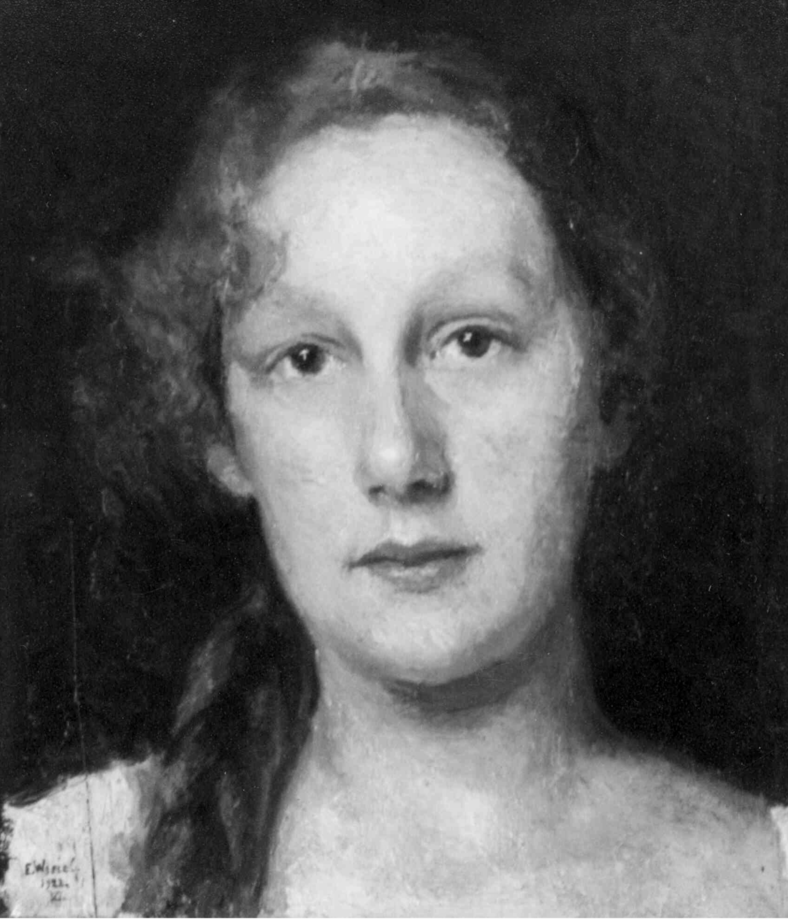
Portrait of the artist’s daughter T. E. Wiesel (by E. O. Wiesel, 1922)
Tatyana Emilievna Wiesel (1904–1976), the younger daughter, finished secondary school in 1923 and entered the school of the Society for the Encouragement of the Arts, later reorganized as the Art and Industry Technical School, where she studied in the theater design division under M. P. Bobyshov and in the graphic division under V. N. Levitsky. Thereafter her whole working life was connected in one way or another with the theater: she worked as an artist for the cultural department of the Pushkin Drama Theatre, the Kharkiv Drama Theatre, the drama circle of the Gorky Palace of Culture in Leningrad and other Leningrad theaters, designing the most varied productions, from adult to children’s work, from classical stagings to plays of the Soviet period. Sets, posters and programs: such was the breadth of her activity. From time to time she contributed as a graphic designer to the magazines “Krasnaya Panorama” and “Life, Art and the Workers’ Theatre”. Like her father, she made many sketches of stage scenes for the Theatre Museum and for the theaters of Leningrad.
Among the artistic legacy of T. E. Wiesel are many landscape and architectural views and sketches of the cathedrals and churches of Staraya Ladoga, Torzhok, Leningrad and Kazan, made as painted studies and as travel notes in pencil, ink and felt-tip pen. Small-format original graphic work occupies a special place in her output. Finely executed bookplates for libraries and for owners of book collections create concise and precise composite images of the people and institutions they represent.
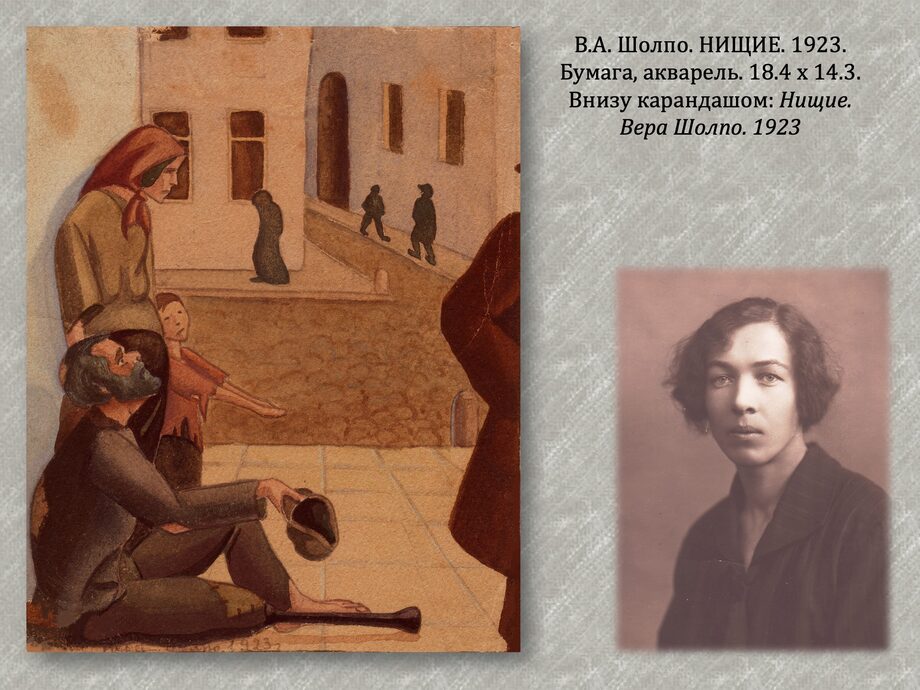
Vera Alexandrovna Sholpo, 1923
In 1929 a new member joined the Wiesel family: Vera Alexandrovna Sholpo (1902–1970). She became the wife of Oskar Emilievich Wiesel, son of Emil Oskarovich and Alexandra Emilievna. From her youth Sholpo consciously dreamed of becoming a professional artist. While still at her gymnasium she began attending the children’s group of the Baron Stieglitz School; in 1917 she was accepted into the studio of E. E. Lanceray and M. V. Dobuzhinsky, and in 1927 she graduated from the Art and Industry Technical School, receiving as a reward for her success the right to a study trip to Central Asia, to Ashgabat. There she met her future husband, O. E. Wiesel, an ethnologist and linguist by profession, who was then working in Ashgabat with an expedition of the Academy of Sciences. In later years Sholpo continued her education at the Leningrad Institute for the Advanced Training of Arts Workers.
Already in Ashgabat the young artist showed various sides of her talent: she created the deeply symbolic series “Women of the East”, very close in spirit to Pavel Kuznetsov’s Turkestan series, and produced a design for a jubilee badge marking the fifth anniversary of the founding of the Turkmen Republic, which won first place in the competition and was subsequently cast in the workshops of Leningrad. In Leningrad she made a number of pencil portraits of cultural figures and worked as a designer for the fine arts committee under contract with theaters, the Academy of Sciences and other institutions.
In the 1930s, after the murder of S. M. Kirov, waves of repression swept through Leningrad and many Leningrad families suffered. In 1935 the Wiesel family — Emil Oskarovich, his wife Alexandra Emilievna, and their son Oskar Emilievich with his wife Vera Alexandrovna and their four-year-old son Andrei — were exiled from Leningrad to the settlement of Chelkar in Kazakhstan. The hardships of life did not break this creative family: both Wiesel and Sholpo produced landscapes of the southern desert climate, genre scenes and portraits with a distinctive national coloring. At the end of 1935 Wiesel and his wife were permitted to return to their native city. Oskar Emilievich’s family was released at the beginning of 1936, but restricted to a list of permitted cities. They chose Kazan as an old center of culture and education with established traditions and a rich artistic life. So one branch of the Wiesel family came to be in Kazan.
Vera Alexandrovna’s lot was a hard one. She had to endure hunger and privation, a second exile and the death of her husband, the hardships of wartime, and constant anxiety for her small son, who grew up a frail and sickly boy. And yet life did not break this strong and highly cultivated personality: she always worked creatively, was a member of the Tatkhudozhnik association from 1937, and in 1939 became a member of the Union of Soviet Artists.
Having begun her career with a serious enthusiasm for the innovative movements of the 1920s and 1930s (Cubism, Symbolism), Sholpo in time changed her manner, giving priority to a realizt direction, as was characteristic of many artists in the years of Stalinist totalitarianism. She worked as a painter and graphic artist, as a theater designer and as a master of the applied arts. Portraiture held a special place in her work. In her later years she created an interesting series, “People of Kazan”, portraying the city’s artists, performers, doctors and scholars.
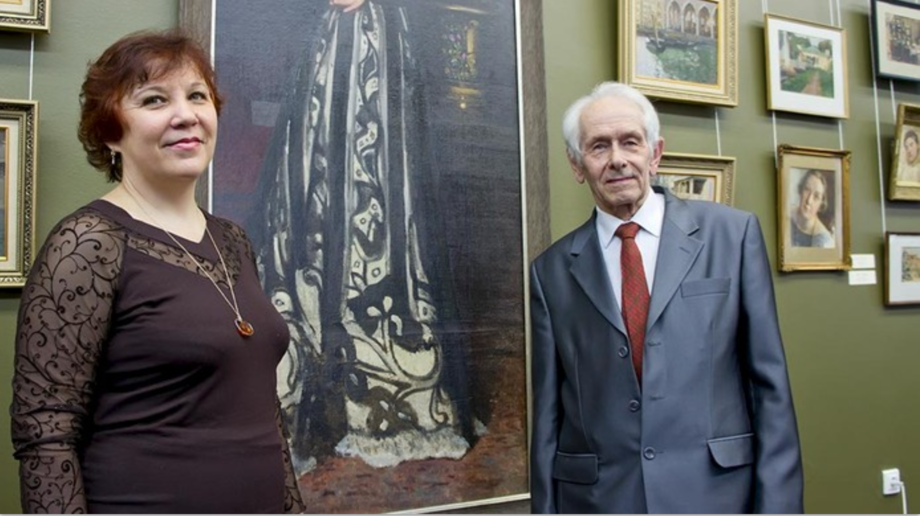
Irina Faekovna Lobasheva and Andrei Oskarovich Wiesel, 2012
Andrei Oskarovich Wiesel (born 1930), son of O. E. Wiesel and V. A. Sholpo, was born in Leningrad, but his whole conscious life has been bound up with Kazan, since at the age of six he came to that city with his parents after their Kazakh exile. As a child he had two passions which stayed with him for life: a love of the exact sciences and an enthusiasm for the visual arts. While attending secondary school he completed a children’s art school, and then entered the Kazan Art College. In those post-war years many established Kazan artists taught there: V. I. Kudelkin, N. M. Sokolsky, Kh. A. Yakupov, P. T. Speransky and V. S. Podgursky. Under such masters he received a strong grounding in drawing, painting and theater design. His preparation as an artist was also greatly influenced by the personality of his mother, and indirectly, as an example, by his grandfather, the academician of painting E. O. Wiesel. Andrei Oskarovich graduated from the college with excellent marks and a recommendation to continue his studies at the Academy of Arts. But his leaning toward the exact sciences prevailed: he entered the Kazan Institute of Chemical Technology and then completed postgraduate study at the Arbuzov Institute of Organic and Physical Chemistry under Academician B. A. Arbuzov. Today he is a candidate of chemical sciences, a leading researcher at the Arbuzov Institute, head of a group searching for new medicinal compounds, an honored worker of science and technology of the Republic of Tatarstan and a laureate of its State Prize.
His artistic training, meanwhile, has not been forgotten: the world of painting lives on in the scientist’s personality and occupies its own particular place. His favored landscape genre finds expression both in familiar views of the forests of Mari El and the countryside around Kazan and in southern motifs. Here the artist-scientist realizes his creative potential in painting, celebrating the beauty of his native places and turning to portraiture as well. The artistic work of this well-known Kazan chemist is lyrical and intimate, elevated and poetic. One can only marvel at the many-sidedness of this personality and take pleasure in his further creative and scientific successes.
As may be seen from this account, the Wiesel family and its artistic heritage are truly a unique page in the history of Russia, and it is not surprising that vivid and many-sided creative personalities appear in it, and will undoubtedly continue to do so.
The interest of the Museum of Fine Arts of the Republic of Tatarstan in the Wiesel art collection arose not long ago, some five years back, although several paintings by the academician of painting E. O. Wiesel, the central figure of the whole dynasty, and by V. A. Sholpo had been acquired for the museum collection as early as the 1970s. That interest, however, was highly active and bore fruit: in 1998 the museum published the catalog “The Wiesel Artistic Dynasty” and organized an exhibition of works by artists of the family, which showed the scale of the collection, its high artistic level, and the variety and range of the works presented. That was the first step in bringing the collection of the whole dynasty to light. The present paper aims to continue what was begun.
Get in touch
Get in touch
If you have information about works by Emil Wiesel, archival documents, or questions about the collection, please write to us.