Family story
Piles and the critical point
Emil and Fanny Strauss had two inventors among their sons. One invented a way of placing piles that Gorodetsky and his contemporaries built on in Kyiv; the other solved a problem Mendeleev had attempted before him.
Alexandra, the painter’s wife, was the youngest child in the large family of the Kyiv doctor Emil Strauss. Two of her brothers left a mark that the family knew only in outline; the details had to be tracked down one at a time.
Anton and his piles
Anton Strauss, an engineer trained at the Mining Institute in St. Petersburg, invented a method of cast-in-place concrete and reinforced concrete piles. It was patented, in the United States among other countries, and used for bridges and buildings.
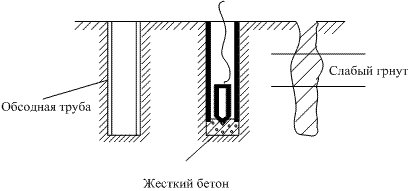
Confirmation turned up almost by accident. A standing Google alert on the name Anton Strauss, set up like a fishing line, went off in 2012: someone had published a detailed piece about him, and in the correspondence that followed the author pointed to the international patent. A century-old document with a drawing, two pages of explanation and the inventor’s own signature.
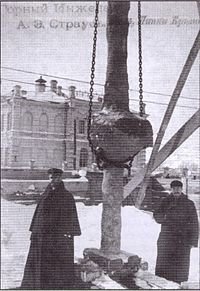
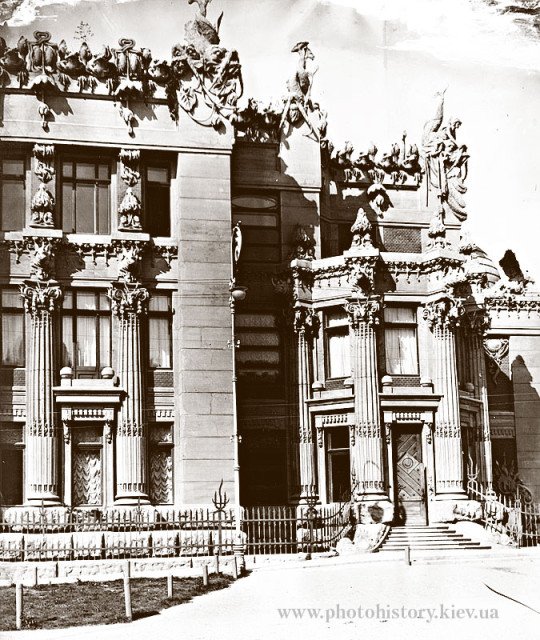
Anton worked for years with the architect Vladislav Gorodetsky. His piles carry the House with Chimaeras, the St. Nicholas Catholic church, the Karaite kenesa and the Kyiv funicular. Besides engineering he drilled wells and prospected for minerals, and in 1907 he joined the Kyiv yacht club, serving as its commodore from 1911 to 1916.
Oskar and the critical values
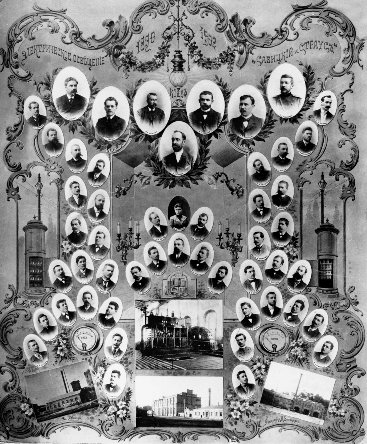
The elder brother, Oskar Strauss, studied in St. Petersburg, taught mathematics and physics and then returned to Kyiv. In 1890 the firm of Savitsky and Straus started the city’s first power station, lighting the theater, a few private houses and fourteen lamps on the Khreshchatyk.
His other work was unknown in the family. In 2016, while gathering material for a Wikipedia article, a study by A. G. Goldman on the history of physics turned up, devoted to Mikhail Avenarius and the Kyiv school of experimental physics. Several of its pages are given to a pupil of that school, O. E. Straus: he determined the critical values for water, a problem that Cagniard de la Tour, Clausius and Mendeleev had attempted without reaching a workable answer.
Oskar also studied in St. Petersburg alongside Alexander Popov and traveled with him to Krasnoyarsk in 1887 to observe a total solar eclipse. After Popov’s death he published a memorial pamphlet that touched on the disputed question of who invented radio first.
What became of either brother after 1917 is unknown.